Veerabhadra, Madurai

Madurai‘s bustling street, or ‘kasakasa‘ as we call them in Tamil, were my frequent haunt during my under-graduate years. I’d navigate the crowded Town hall road, hunting for electronic parts for my often-unsuccessful projects. The city’s energy was intoxicating, allowing me to venture there after classes and return home late in the night. Evenings often found me at Periyar bus stand, happily munching onion bajji-s that filled my belly with utmost happiness!

Sri Meenakshi Temple, (mīnākṣī/मीनाक्षी) a stone’s throw from Town Hall Road, became my sanctuary. My reverence for the queen of Madurai grew with each visit, continuing even after I started working, with frequent trips between July and October 2002.

Madurai | Pandian Ramaiah, Oct 2002

Armed with newfound passion for photography and digital camera, I set out to verify my readings about the temple in person. Sadly many of those captured moments have been lost over time.

The temple stands as testament to magnificent sculpture, with Nayaka dynasty’s contributions during 16th and 17th centuries, being particularly impressive. In the mukha-mandapa of the Sri Sundareswara shrine (śrī sundarēśvarā/श्री सुन्दरेश्वरा), The Agni veerabhadra (agni vīrabhadrā/अग्नि वीरभद्रा) and Agora Veerabhadra sculptures captivate visitors.

Agora Veerabhadra, Madurai | Picture (c) Giridhar

Veerabhadra, born from Shiva’s wrath, is a formidable figure Hindu purana-s. The sculpture’s imposing presence is really scary with its four arms on each side wielding various weapons, including a bow in his right hand and left hand taking an arrow from quiver at his back. Notably a long sword – instrument of Daksha’s demise – is in one of his left hands.

As per iconography, Daksha should be depicted with the head of a goat nearby with his hands in a worshiping position. This representation symbolizes his resurrection and humility after Shiva restored him.

Agora Veerabhadra | Picture source: Unknown.

Additionally Bhadrakali, who was also created from Shiva’s anger along with Veerabhadra should be beside him. I don’t recall seeing them. I’ll have to check next time to be sure.

One concerning practice I observed was people throwing butter balls at the sculpture. This ritual, of unclear origin, mars the sculpture’s beauty and combined with inadequate maintenance, is a worrying sight.

The story of Daksha resonates even today, reminding us of the consequences of unchallenged ego. His transformation, symbolized by the goat’s head, represents the potential self-recovery and ensure we are on the way to enlightenment.

This post is part of Blogchatter’s WRITE A PAGE A DAY 2025 campaign.

Horsemen pillars of Vijayanagara/Nayaka

Sri Varadharaja Perumal Temple in Kanchipuram is popular for its exquisite architectural features, including the 100 Pillared Hall. When I went there for the first time, the shrine was closed as the lord Varadharaja is taking his afternoon nap. Until the temple opens, I was roaming around this hall.

from Sri Varadharaja Perumal Temple | Pandian Ramaiah 17 Sep 2006

I found intricately carved pillars, which depict horses and mystical creatures or Yalis ridden by warriors. Sadly, the mandapam was closed. I could not enjoy all the creative skills of artistry skills. These pillars are not only aesthetically wonderful but also showcase the advanced craftsmanship of the Vijayanagara era.

The 100(0) pillared mandapam, Sri Varadaraja Perumal Temple, Kanchipuram | Pandian Ramaiah, 17 Sep 2006.

I understood that this 100 Pillared Hall is a significant part of the temple’s expansion during the Vijayanagara Empire’s reign. The carvings on the pillars include scenes from the depictions of Vishnu and his avatars. The nearby temple tank made my presence serene.

The Horse armour from Varadharaja Perumal Temple | Pandian Ramaiah, 17 Sep 2006

The horsemen pillars are typical style of Vijayanagara and Nayaka-s who are Vijayanagara’s chieftains. Typically such pillars elevate the temple’s status as a masterpiece of Vijayanagara architecture, reflecting the rich cultural and religious heritage of the region.

I wish to highlight two more places with pillars depicting horsemen –

  • Sri Ranganathaswamy Temple, Srirangam – The temple’s 1000 Pillared Hall features sculptures of rearing horses with riders exemplifying Vijayanagara artistry. The hall is a notable example of planned theatre-like structures, to gather devotees.
  • Shikakiriswara temple, Kudumiyamalai – I spoke about this temple in this series earlier. Similar to 100 pillard mandapam of Kanchipuram and 1000 pillared mandapam of Srirangam, there is a Anivetti-k-kal-mandapam contributed by Nayaka-s.

Let me quote from the documentation of Prof S Swaminathan and MV Kiran –

The portrayal here of figure of horsemen treading over the foot soldiers is of particular interest. One can see here weapons used respectively by the horseman and the foot soldiers and the method in which the foot soldiers defended themselves from the attacks of the horsemen.

Kudumiyamalai, SS, MVK

Horsemen pillar at Kudumiyamalai | Pandian Ramaiah, 23 ‎April ‎2007

All three temples share similarities in their architectural features: a hall with pillars adorned with riders on horse/mythical yali/other animals.

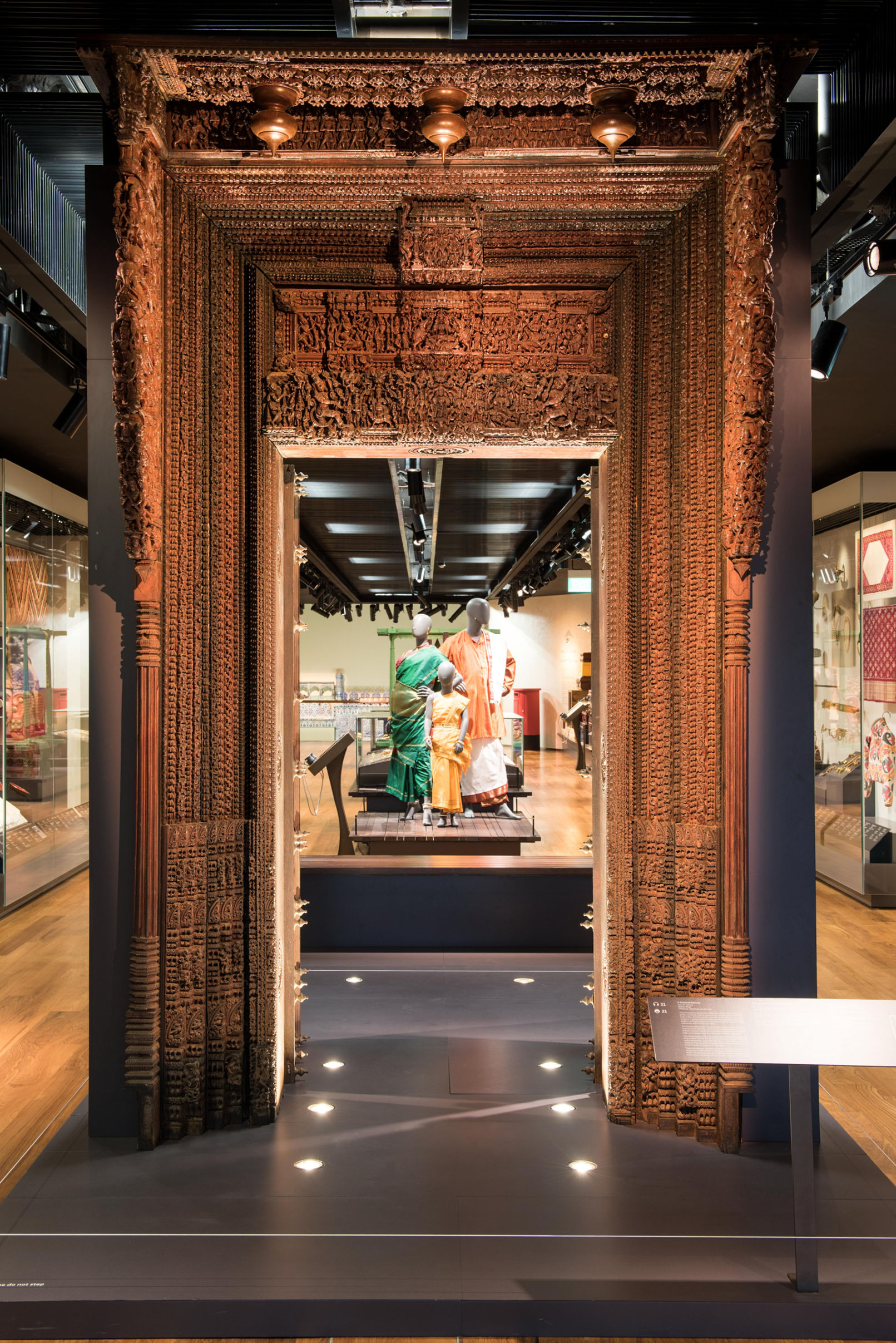
Additionally, I’d like to mention an artifact often highlighted during my museum tours: the Chettiar Doorway at the Indian Heritage Centre in Singapore.

Chettinad Door way, Indian Heritage Center, Singapore | Picture credit: indianheritage.gov.sg

This doorway is adorned with over 5000 carvings, including Ramayana, Vishnu riding on Garuda’s shoulders, Ganesha, Subramanya, Gajalakshmi and other motifs. On the side, we saw beautiful armours riding horses and Yali-s. It reflects the influence of Nayaka art on Chettinad architecture.

The door way, side view | Picture (c) arizonahandbook.com

Breathtaking, isn’t it?

While discussing South Indian temple architecture, it is essential to acknowledge the contributions of the Vijayanagara and Nayaka dynasties, particularly, Nayakas’ colossal sculptures. At first sight, it pins your mind with it majestic beauty. If you have the opportunity, visit these sites and share your experiences with me.

This post is part of Blogchatter’s WRITE A PAGE A DAY 2025 campaign.