Sri Varadharaja Perumal Temple in Kanchipuram is popular for its exquisite architectural features, including the 100 Pillared Hall. When I went there for the first time, the shrine was closed as the lord Varadharaja is taking his afternoon nap. Until the temple opens, I was roaming around this hall.

I found intricately carved pillars, which depict horses and mystical creatures or Yalis ridden by warriors. Sadly, the mandapam was closed. I could not enjoy all the creative skills of artistry skills. These pillars are not only aesthetically wonderful but also showcase the advanced craftsmanship of the Vijayanagara era.

I understood that this 100 Pillared Hall is a significant part of the temple’s expansion during the Vijayanagara Empire’s reign. The carvings on the pillars include scenes from the depictions of Vishnu and his avatars. The nearby temple tank made my presence serene.

The horsemen pillars are typical style of Vijayanagara and Nayaka-s who are Vijayanagara’s chieftains. Typically such pillars elevate the temple’s status as a masterpiece of Vijayanagara architecture, reflecting the rich cultural and religious heritage of the region.
I wish to highlight two more places with pillars depicting horsemen –
- Sri Ranganathaswamy Temple, Srirangam – The temple’s 1000 Pillared Hall features sculptures of rearing horses with riders exemplifying Vijayanagara artistry. The hall is a notable example of planned theatre-like structures, to gather devotees.
- Shikakiriswara temple, Kudumiyamalai – I spoke about this temple in this series earlier. Similar to 100 pillard mandapam of Kanchipuram and 1000 pillared mandapam of Srirangam, there is a Anivetti-k-kal-mandapam contributed by Nayaka-s.
Let me quote from the documentation of Prof S Swaminathan and MV Kiran –
The portrayal here of figure of horsemen treading over the foot soldiers is of particular interest. One can see here weapons used respectively by the horseman and the foot soldiers and the method in which the foot soldiers defended themselves from the attacks of the horsemen.
– Kudumiyamalai, SS, MVK

All three temples share similarities in their architectural features: a hall with pillars adorned with riders on horse/mythical yali/other animals.
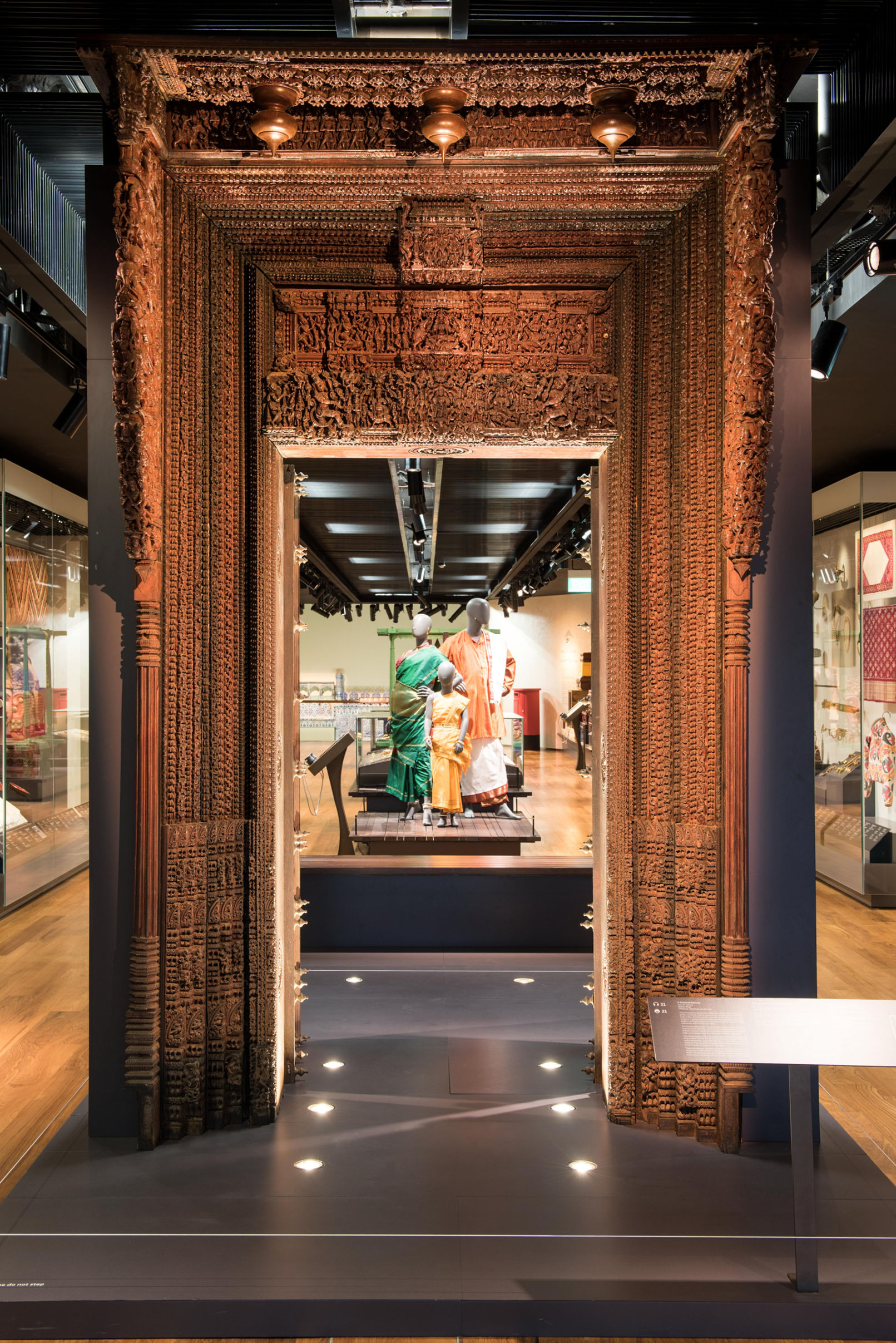
Additionally, I’d like to mention an artifact often highlighted during my museum tours: the Chettiar Doorway at the Indian Heritage Centre in Singapore.

This doorway is adorned with over 5000 carvings, including Ramayana, Vishnu riding on Garuda’s shoulders, Ganesha, Subramanya, Gajalakshmi and other motifs. On the side, we saw beautiful armours riding horses and Yali-s. It reflects the influence of Nayaka art on Chettinad architecture.

Breathtaking, isn’t it?
While discussing South Indian temple architecture, it is essential to acknowledge the contributions of the Vijayanagara and Nayaka dynasties, particularly, Nayakas’ colossal sculptures. At first sight, it pins your mind with it majestic beauty. If you have the opportunity, visit these sites and share your experiences with me.
This post is part of Blogchatter’s WRITE A PAGE A DAY 2025 campaign.