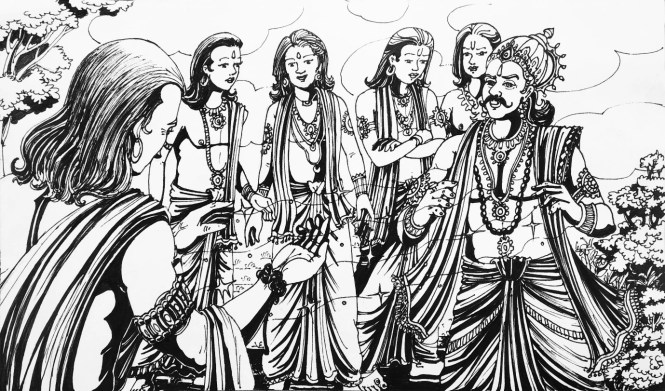
Kunti became a mother first. As a sister-in-law, Gandhari felt insecured about the throne now. The agony and trauma experienced by Pandu earlier, apprehended Gandhari’s mind now. The thoughts about the chief chair of Hastinapur bloated everyone’s mind.
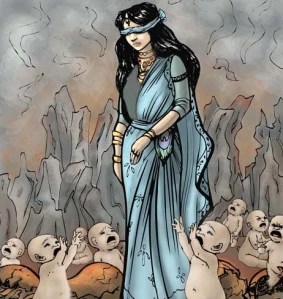
Gandhari conceived well before Kunti. But she did not give birth. Hapless Gandhari did not find a way. She had been pregnant for 2 years already. With conscious volition, she decided to give birth forcefully. She ordered her maids to strike her belly with an iron bar. No one had the temerity to question her. Though the hesitated, they tended to hit her. There comes the fate.
Vyasa and Gandhari
She did not give birth to a boy or a girl. It was a sphere of flesh with pulse for life. As per Sage Vyasa’s suggestion, the piece was broken into 100 pieces and stored inside different pots with Ghee inside. Poor Gandhari wanted a girl baby as well. So it was broken into 101 pieces and incubated.
When I heard that Kunti had given birth to her first son, as radiant as the sun, I struck my belly in grief. Earlier, you granted me the boon that I would have a hundred sons. But instead of those 100 sons, this mass of flesh has been born to me.
சூரியனைப் போல பிரகாசமான தன் முதல் மகனை குந்தி பெற்றெடுத்தாள் என்று நான் கேள்விப்பட்டபோது துக்கத்தில் என் வயிற்றில் அடித்தேன். இதற்கு முன், எனக்கு நூறு மகன்கள் பிறக்கும் வரம் தந்தீர்கள். ஆனால் அந்த 100 மகன்களுக்குப் பதிலாக இந்த சதை நிறை எனக்கு பிறந்துள்ளது.
Gandhari to Vyasa, Adi Parva, , The Mahabharata Set Of 10 Volumes
Gandhari
Sage Vyasa assured her the flesh pieces would be changed to children in an year. After an year, first pot was broken. There comes a boy. Gandhari named him as Duryodhana. Over the period rest of the incubators are broken too. The story is like eggs and chicken, isn’t it? Finally there is a girl baby. She named her as Dusshala.
O Subala’s daughter! It will be as I have said and not otherwise. I have never uttered a falsehood in jest. Why should I do it when I am in earnest? Quickly bring a hundred pots and fill them up with ghee. Let cool water be sprinkled on this mass of flesh.
ஓ சுபலரின் மகளே! நான் சொன்னபடியே இருக்கும், மற்றபடி இருக்காது. நான் ஒருபோதும் (பிறரின்) மகிழ்ச்சிக்காகப் பொய் சொன்னதில்லை. நான் ஆர்வமாக இருக்கும்போது அதை ஏன் செய்ய வேண்டும்? சீக்கிரம் நூறு பானைகளைக் கொண்டு வந்து நெய் நிரப்பு. இந்த சதையின் மீது குளிர்ந்த நீர் தெளிக்கப்படட்டும்.
Vyasa to Gandhari, Adi Parva, , The Mahabharata Set Of 10 Volumes
Gandhari, the great mother
In addition, Dhritarashtra had a son – Yuyutsu – with a Vaishya maid Sughada. He was grown along with Gandhari’s children as well.
Once Sage Kindama and his wife wanted to get intimate in open. They turned themselves into an antelope and doe. Pandu crossed that place in the forest when he went for hunt. He hit them wit his arrow. Kindama was attacked. He cursed Pandu that Pandu will never touch a women. If he touch them, he will die on the spot.
Sage Kindama and Pandu, wikipedia
You follow dharma and you know the pleasure that comes from satisfaction of desire. But you have killed me before my desire was satiated. Therefore, you will also be united with the five elements! in a similar state, before your desire is satiated. நீ தர்மத்தைப் பின்பற்றுகிறாய், ஆசையின் திருப்தியால் வரும் இன்பத்தை நீ அறிவாய். ஆனால் என் ஆசை தீரும் முன்பே என்னை கொன்று விட்டாய். ஆதலால் நீயும் இதே நிலையில், உன் ஆசை நிறைவேறும் முன், ஐம்பூதங்களுடன் ஐக்கியமாகி விடுவாய்!
Sage Kindama to Pandu
Whether it is right for Kindama to curse like this itself a debate. But we assumed the curse had an effect.
Pandu was unable to give birth to any child with both Kunti and Madri. This frustrated him too much. To overcome this, he spent his time on hunting. To end a progeny is a pain for anyone. It is their progeny that would help him to find his way to heaven and the route for his next birth. So Pandu was worried if he would die without children. Finally he left Hastinapur in his brother Dhritarashtra’s care and left to forest. Kunti and Madri followed him.
Kindama’s curse. Picture credit: wikipedia
Kunti’s children
Meanwhile, Pandu came to know that Gandhari was pregnant. Hapless Pandu realized that he was losing his control on Hastinapur as the ender descendant decides who will rule the country from there on.
The exile life. Picture credit: wikipedia
This is the result of my own folly. But I have heard that in the hereafter there are no worlds for those who are childless.
Tamil Translation: இது என் சொந்த முட்டாள்தனத்தின் விளைவு. ஆனால் குழந்தை இல்லாதவர்களுக்கு மறுமையில் உலகங்கள் இல்லை என்று கேள்விப்பட்டிருக்கிறேன்.
Pandu to Kunti
Kunti understood Pandu’s grief. She revealed about Sage Durvasa’s boon to her that can help her to summon any God and give birth to its child. Prior to that Kunti explained him the ways of getting children if her husband is unable to procreate in monogamy.
Pandu – Kunti’s dialog. Picture credit: wikipedia
Pandu was pleased by this. He requested Kunti to call Yama, the god of dharma. As he wished, Kunti gave birth to Yudhishthira. Then Pandu preferred Vayu, the god of Air. The powerful Bhima was born. The last child of Kunti, Arjuna, was born to Indra.
Kunti invokes Indra: Picture credit: wikipedia
Till today, I think about the real persons behind the names Yama, Vayu and Indra.
Madri’s Twins
Pandu wanted Kunti to give more children. Kunti refused because of the dharma, that says a woman can not sleep with more than four men.
Pandu and Madri in exile. Picture credit: Pinterest
Your co-wife does not have children either. Let the right offspring also be fathered on her.
Tamil Translation: உன் துணை-மனைவிக்கும் குழந்தைகள் இல்லை. அவளுடைய சரியான சந்ததிக்கும் நான் தந்தையாகிறேன்.
Pandu to Kunti
Pandu asked Kunti to help Madri to give birth to sons as well, so that he can get more more children. Kunti and Madri agreed. Madri preferred to call Ashwini deva-s, the gods of morning and evening stars.
The deva-s came and helped Madri to get Nakula and Sahadeva.
Pandu still asked Kunti to get more kids by Madri. She refused to oblige.
The Pandava-s
Yudhishthira, who followed dharma, being impartial, educated as the chief, Bhima, a strongest to save his elder brother, Arjuna, a brave warrior to get victories after victories, Nakula-Sahadeva with skills in arts, science, finance, administration etc. – these descendants of Pandu are called the Pandava-s.
The Descent of Pandu
Pandu lived happily with his kids in the forest. There comes an end!
One day in his exile life, Pandu saw Madri beautifully dressed in her ornaments and his desire was stirred. Pandu can not and Madri did not resist. But he died as soon as he touched her. Sage Kindama might be out of his grudge then.
Pandu – Madri. Picture credits: Unknown
Kunti and Pandava-s arranged for his funeral in the forest itself. Then Madri ascended the funeral pyre with him. Before that she requested Kunti to affectionately rear the twins. Madri might have envied her for her first wife status. Still she might have realized the kind hearted nature of Kunti. She chose to leave her twins under her care while she followed Pandu to eternity.
End of Pandu and Madri
Kunti took good care of them.
The Pandavas, https://www.deviantart.com/molee/art/Kunti-and-Pandavas-412944958
Thus Pandu’s life ended without going back to Hastinapur. After Pandu left this world, rishi-s took Kunti and Pandava princes back to Hastinapur.
River Ganga returned Devavrata to Shantanu. He was skillful. He was better than his father in martial arts. He was a virtuous young chap. No wonder, everybody liked him. Everybody thought he is the future of Hastinapur. He was crowned as prince of Shantanu’s throne as well.
Destiny finds those who listen, and fate finds the rest:
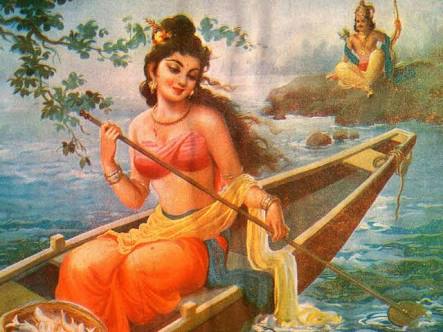
Shantanu fell in love again. This time, Fisher women Satyavati has captivated his lover mind. He asked her to marry him immediately. This is Shantanu’s love 2.0.
Destiny has its own destination. Satyavati had her own destination too. Like Ganga, Satyavati is ready to agree for a marriage, if her conditions are fulfilled. Life is interesting because you will never guess what will happen in your next moment. Life is terrific because you will never guess what will happen in your next moment. It was terrific for Shantanu.
Satyavati
Shantanu is not ready to offer this promise. Other than Shantanu, who will know the problem in unconditional acceptance of a condition. He did not want to repeat the same mistake he did with Ganga. At the same time, he did not forget the fisher lady. His health was affected by the ordeal.
Shantanu and Satyavati, Raja Ravi Varma. Picture credit: wikipedia
Devavrata understood this. He get in to the scene. He vowed. He promised Satyavati that he will abandon Hastinapur’s plan of making him as the successor of his father’s throne. So Satyavati should be relaxed as if Indian election candidate felt relaxed after bribing the voters.
Devavrata’s vow, Madhubani painting (c) The Illustrated Mahabharata, Dorling Kindersley India
While most of the Indian voters are happy with the standard bribing money, few of the voter will be highly demanding. Satyavati’s father was like that. When Satyavati thought about present days, he thought about future. He asked Devavrata, what if Devavrata’s sons fight with Satyavati’s sons later? Here comes the next Vow from Devavrata. He promised that he would never get married and he would not be with a woman and he would never father a child. Devavrata’s vow surprised many, which included the deva-s and God-s. They showered flowers on him.
Devavrata vow, Raja Ravi Varma. Picture credit: Quora
O king of fishermen! O supreme among kings! Listen to these words of mine. In front of these lords of the earth, hear what I have to say for my father’s sake. O lord of men! I have already relinquished my right to the kingdom. I will not destroy the doubt that has arisen about my sons. O fisherman! From today, I take the vow of brahmacharya, Even if I die without a son, I will attain the eternal world of heaven.
– The Mahabharata: Volume 1, Volume 1, Translated by Bibek Debroy
But the vow, changed the future of Hastinapur, but not in a positive way.
Puru’s descendant is Pratiba. Pratiba’s son was Shantanu. Shantanu’s story is version 2 of Pururavas. Pratiba gave up his throne renounce his worldly pleasures. He had two sons. Devapi and Shantanu. Devapi had skin disease. As a norm, persons with a physical defect should not be crowned as a King. So he made Shantanu as king of Hastinapur and left.
Devapi does not want to live under the shadow of his younger brother. He left Hastinapur and chose to live in exile.
One day, Shantanu was roaming around the banks of river Ganga. There he saw a charming maiden – Ganga. He did not think about anything else. He fell in love with her immediately as he was taken away by her beauty. He told her ‘Be my wife’ immediately.
O beautiful one! O one with the slender waist! Are you from the race of gods, demons, gandharvas, apsaras, yakshas or pannagas, or are you human? You seem to be born of the gods. Whoever you are, please be my wife. Tamil Translation: அழகானவளே! மெல்லிடையாளே! நீ தேவர்கள், அசுரர்கள், கந்தர்வர்கள், அப்சரஸ்கள், யக்ஷர்கள் அல்லது பன்னகர்கள் இனத்தைச் சேர்ந்தவளா அல்லது நீ மனித குலப் பெண்ணா? நீ தெய்வப் பிறவி போல் தெரிகிறது. நீ யாராக இருந்தாலும், தயவுசெய்து என் மனைவியாக இரு.
– Shantanu to Ganga, Adi Parva, The Mahabharata Set Of 10 Volumes, Bibek Debroy
Shantanu and Ganga, alamy.com
She too agreed immediately without any hesitation. But the marriage was based on a condition. Ganga does not want Shantanu to question her for any her doings. Shantanu did not think about anything other than the married life with her. He agreed without reluctance.
O lord of the earth! I will be your queen and will obey your words. O king! But you must not interfere in my acts, regardless of whether they please or displease you. You must never try to stop me or speak to me harshly. O king! As long as you act in the way I have asked you to, I will be with you. But I will certainly leave you whenever you try to stop me or speak to me harshly.
Tamil translation: இந்நிலத்தின் மன்னவ! நான் உனது அரசியாக இருப்பேன், உன் சொற்களுக்குக் கீழ்ப்படிவேன். அரசே! ஆனால் உனக்குப் பிடித்தாலும் அல்லது பிடிக்காவிடினும் நீ என் செயல்களில் தலையிடக்கூடாது. நீ ஒருபோதும் என்னைத் தடுக்கவோ, என்னிடம் கடுமையாகப் பேசவோ முயற்சிக்கக் கூடாது. அரசே! நான் கேட்டபடி நீ செயல்படும் வரை நான் உன்னுடன் இருப்பேன். ஆனால் நீ என்னைத் தடுக்க முயற்சித்தாலோ அல்லது என்னிடம் கடுமையாகப் பேசினாலோ நான் உறுதியாக உன்னை விட்டு விலகுவேன்.
– Ganga to Shantanu, Adi Parva, The Mahabharata Set Of 10 Volumes, Bibek Debroy
Shantanu and Ganga. Picture credit: Quora
Ganga gave birth to their first son. But she took the newborn away and drowned him in the river. Shantanu was shocked. The new born was suppose to take over his crown later. But it was too late. The new born could not come back. Ganga repeated this for their next kiddo too. Another one.. Another one… wah!
Shantanu lost his patience at last. He stopped Ganga and shouted at her before she throw the eighth child. Ganga paused for a while and smiled at him. She proclaimed that Shantanu broke his promise to her.
Do not kill him. Who are you? Who do you belong to? Why do you kill your sons? As a murderer of your sons, you are committing a great sin. O evil one! Do not commit sin. Desist.
Tamil Translation: அவனைக் கொல்லாதே. யார் நீ? நீ யாரைச் சேர்ந்தவள்? உன் மகன்களை ஏன் கொன்றாய்? உனது மகன்களைக் கொன்று, நீ பெரும் பாவத்தைச் செய்கின்றாய். தீயவளே! பாவம் செய்யாதே. விலகு.
Shantanu to Ganga, Adi Parva, The Mahabharata Set Of 10 Volumes, Bibek Debroy
Ganga, Shantanu and Vasu
Those kids were vasu-s – Gods been cursed to born as humans due to the curse of Rishi Vashishtha. They seek help of Ganga to born in this earth. She helped seven of them. She could not help the eighth vasu, as Shantanu stopped her. So the eight child should now then. But she told Shantanu that that eighth son will not inherit his throne; he will not have a family; still he would be forced to be within the family; finally he would die at the hands of a man who is actually be a woman.
Since you desire a son, I will not kill this son. You will become the supreme father of a son. But following our agreement, my stay here has come to an end. I am Ganga, the daughter of Jahnu and worshipped by large numbers of maharshis. I have lived with you so far to accomplish the wishes of the gods.
Tamil Translation: நீர் உன் மகனை விரும்புவதால், நான் இந்த மகனைக் கொல்ல மாட்டேன். நீர் ஒரு மகனுக்கு உயர்ந்த தந்தையாக மாறுவீர். ஆனால் நம் உடன்படிக்கை மீறிப்பட்டதனால் தொடர்ந்து நான் இங்கு தங்கியிருப்பது முடிவுக்கு வந்தது. நான் கங்கை, ஜஹ்னுவின் மகள் மற்றும் ஏராளமான முனிவர்களால் வணங்கப்பட்டவள். தேவர்களின் விருப்பத்தை நிறைவேற்றவே இதுவரை உன்னுடன் வாழ்ந்தேன்.
– Ganga to Shantanu, Adi Parva, The Mahabharata Set Of 10 Volumes, Bibek Debroy
Disappointed Shantanu was confident to stop that to happen to his eighth son. But Ganga told him that he might be a king, but even he could not change what was decided to happen already. She disappeared with her son then.
Ganga Bhishma (c) Raja ravi varma heritage foundation
Ganga sent back her son after he attained the right age to marry and assume the throne. Before that he learnt martial arts from Parashurama. He had been named as Devavrata. People of Hastinapur loved him so much and expected him to succeed Shantanu. But what Ganga told earlier was waiting to happen.
When Yayati went to forest, he went deep into it. He heard a voice of a woman inside the forest. He followed the path towards that voice. It came from a well. There was a maiden inside a well, screamed for help to come out. Yayadi extended a helping hand to Devayani.
Amar Chitra Katha – wrapper
Devayani was the daughter of Shukra Acharya, the guru of asura-s. Sharmistha was her close friend. Sharmistha was the daughter of asura king Vrishparva.
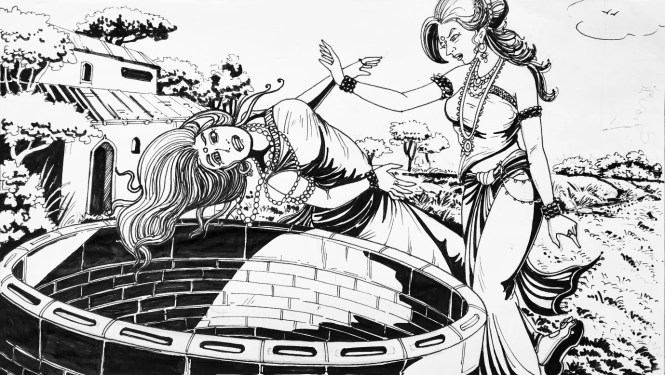
One day, Devayani and Sharmistha went to bath in a well in the nearby forest. A minor conflict between them became a game changer. Devayani and Sharmistha’s robes were interchanged by mistake. Devyani took it as a serious breach. Sharmistha pushed Devayani inside the water body after a harsh conversation, before she left the place. Yayati came later to rescue her.
O daughter of the Asura (chief), why dost thou take my attire, being, as thou art, my disciple? As thou art destitute of good behaviour, nothing good can happen to thee! அசுரர் தலைவனின் மகளே, நீ என் சிஷ்யையாக இருந்தும், ஏன் என் உடையை எடுத்துக்கொள்கிறாய்? நீ நல்ல நடத்தை இல்லாதவளாக இருப்பதால், உனக்கு நல்லது எதுவும் நடக்காது!
– Devyani to Sharmistha, Sambhava Parva
Though they are thick friends, the both of them think they are superior, Devyani by her renunciation and Sharmishtha by her power.
Thy father occupying a lower seat, always adoreth with downcast looks, like a hired chanter of praises, my father, whether he sitteth at his ease or reclineth at full length! Thou art the daughter of one that chanteth the praises of others, of one that accepteth alms. I am the daughter of one who is adored, of one who bestoweth alms instead of ever accepting them! Beggar-woman as thou art, thou art free to strike thy breast, to use ill words, to vow enmity to me, to give way to thy wrath. Acceptress of alms, thou weepest tears of anger in vain! If so minded, I can harm thee, but thou canst not. Thou desirest to quarrel. But know thou that I do not reckon thee as my equal! என் தந்தை, நிம்மதியாக அமர்ந்தாலும் அல்லது முழு நீளமாக சாய்ந்தாலும், கீழ் இருக்கையில் அமர்ந்திருக்கும் உனது தந்தை, எப்பொழுதும் தாழ்ந்த தோற்றத்துடன், கூலிக்கு துதி பாடுபவர் போல. நீ பிறர் புகழ் பாடும் ஒருவரின் மகள், பிச்சை ஏற்கும் ஒருவரின் மகள். போற்றப்படுபவரின் மகள் நான், எதையும் பிறரிடம் பெறாமல் தானம் செய்பவரின் மகள்! யாசகம் பெறுபவரின் பெண்ணே, நீ உன் மார்பில் அடித்துக்கொள்ளவும், தவறான வார்த்தைகளைப் பிரயோகிக்கவும், எனக்கு விரோதமாகச் சபதம் செய்யவும், உனது கோபத்திற்கு வழிவிடவும் சுதந்திரம் பெற்றவள். அன்னதானத்தை ஏற்றுக்கொள்பவளே, வீணாகக் கோபத்தால் கண்ணீர் வடிக்கிறாய்! நினைத்தால், நான் உனக்கு தீங்கு செய்ய முடியும், ஆனால் உன்னால் முடியாது. நீ சண்டையிட விரும்புகிறாய். ஆனால் நான் உன்னை எனக்கு இணையாகக் கருதவில்லை என்பதை நீ அறிந்துகொள்!
– Sharmistha to Devyani, Sambhava Parva
Devyani being rescued from the well by Yayati, painting by BP Banerjee.- https://en.wikipedia.org/wiki/Devayani
Devayani complained to her father Shukracharya. Shukara was angry. He refused to perform any yagna-s until Sharmistha apologizes. In addition, Devayani wanted Sharmistha to serve her as a maid. What a grudge!! Not performing yagna-s may weaken the king against his enemies. So the king was left without any choices. He sent his princess as a maid to the daughter of his Guru.
DEVYANI YAYATI RAJA – Ravi Vaibhav
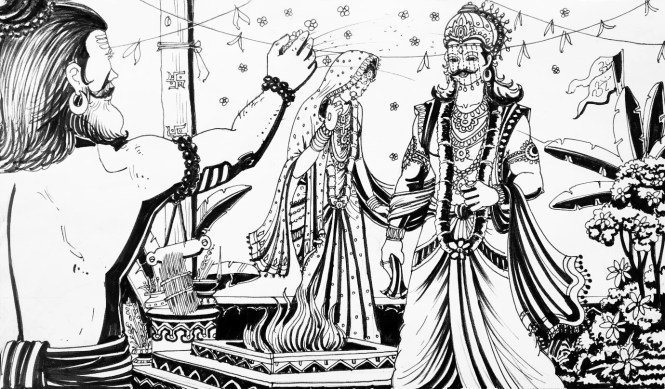
Yayati hold Devyani’s hand when he rescued her from well surrounded by woods. It was agreed as their marriage. A daughter of an acharya became the empress of Hastinapur now. Out of her grudge, Devyani wanted Sharmistha to follow her to Hastinapur as her maid.
Fate did not get out of Devayani’s life. She paid a heavy price for her grudge. She thought Sharmistha will be jelous about her. But what happened was something different.
Devayani was mere a daughter of an Acharya. But Sharmistha was a princess. Her personality attracted Yayati. We know about Chandravamsha kings and their stories. Yayati is not different from them. He married Sharmistha secretly.
O son of Nahusha, no one can behold the ladies that dwell in the inner apartments of Soma, of Indra, of Vishnu, of Yama, of Varuna, and of thee! Thou knowest, O king, that I am both handsome and well-born. I solicit thee, O king! My season hath arrived. See that it goeth not in vain. நஹுஷனின் மகனே! சோமன், இந்திரன், விஷ்ணு, யமன், வருணன் மற்றும் உன்னுடைய ஆழ்மனதில் வசிக்கும் பெண்களை யாராலும் பார்க்க முடியாது! அரசே, நான் அழகாகவும், நற்குடியில் பிறந்தவளாகவும் இருக்கிறேன் என்பதை நீ அறிவாய். நான் உன்னிடம் வேண்டுகிறேன் அரசே! எனது பருவம் வந்துவிட்டது. அது வீண் போகாமல் பார்த்துக் கொள்ளுங்கள்.
Sharmistha to Yayati, Sambhava Parva
Devayani was unaware of this. When Sharmistha’s children called Yayati as father, she understood everything.
O thou of sweet smiles, all that I told thee of a Rishi is perfectly true. I have acted rightly and according to the precepts of virtue, and therefore, do I not fear thee. When thou hadst chosen the king for thy husband, I, too, chose him as mine. O beautiful one, a friend’s husband is, according to usage, one’s own husband as well. Thou art the daughter of a Brahmana and, therefore, deservest my worship and regard. But dost thou not know that this royal sage is held by me in greater esteem still? இனிமையான புன்னகை உடையவளே, ஒரு ரிஷி பற்றி நான் உன்னிடம் கூறியது முற்றிலும் உண்மை. நான் நல்லொழுக்கத்தின் விதிகளின்படி சரியாகவும் நடந்து கொண்டேன், எனவே நான் உனக்கு அஞ்சமாட்டேன். நீ உன் கணவனாக ராஜாவைத் தேர்ந்தெடுத்தபோது, நானும் அவனை என்னுடையவனாகத் தேர்ந்தெடுத்தேன். அழகானவளே, ஒரு தோழியின் கணவர், வழமையின்படி, தன் சொந்தக் கணவரும் கூட. நீ ஒரு பிராமணனின் மகள், எனவே, என் வணக்கத்திற்கும் மரியாதைக்கும் தகுதியானவள். ஆனால், இந்த அரச முனிவரை நான் இன்னும் அதிகமாக மதிக்கிறவள் என்பது உனக்குத் தெரியாதா?
-Sharmistha to Devayani, Sambhava Parva
Yayati and Sharmistha tried their best to justify and sooth her, but in vain. Devayani left Yayati and back to her father. Shukracharya cursed Yayati with old age and impotence. Later he modified the curse in a way that he can get back to younger age if any of his sons take back his old age. Else, the curse will affect his own daughter as well. Which lady will be ready to live with a old man?
The cursed Yayāti begs forgiveness of Shukracharya – https://en.wikipedia.org/wiki/Yayati
Yayati asked his sons. None accepted except Puru, the youngest. Puru accepted the curse suffering old age and impotence while Yayati became youth and virility.
Few years later, Yayati felt enough of his youthful life and released Puru from curse. He made Puru as the king as well. He cursed other elder sons for not sharing the burden of their fathers.
Prosperity be thine! Receive back this thy youth! Receive thou also my kingdom. Thou art, indeed, that son of mine who has done me the greatest services. செழிப்பு உனக்கே! இந்த இளமையை திரும்ப பெற்றுக்கொள்! நீயும் என் அரசை ஏற்றுக்கொள். எனக்கு மிகப் பெரிய சேவை செய்த என் மகன் நீயே.’
– Yayati to Puru, Sambhava Parva
sharmistha push devyani – https://mysutradhar.comsharmista became Devayani’s maid – https://mysutradhar.comYayati Devayani’s wedding – https://mysutradhar.comDevyani came to know about Yayati-Sharmistha relationship – https://mysutradhar.com
Shakuntala’s story is yet another disappointing one of Chandravamsha. King Kausika was a Suryavamshi King. He wanted to be the the most powerful. He renounced all his wealth and wishes. He started his penance and meditation to attain his wish. Indra – the coward conspirer in Pururavas story – afraid that Kausika will be a threat to his throne. He did another conspiracy. He sent Menaka , an apsara – the celestial dancer – to lure Kausika and derail him from his ambitions.
Kausika succumbed to Menaka’s charm. He turned down his penance for her. They had a union and Menaka gave birth to a beautiful daughter. There comes the guilt. Kausika hate himself and Menaka. For him this child a proof of failure. For Menaka, this child is yet another symbol of her victory. Both abandoned the child.
Shakun birds kept her safe under their wings. Sage Kanva rescued her and named after Shakun birds – Shakuntala. The innocent child grown as beautiful, coy and young lady in Kanva’s ashram which was surrounded by beautiful trees and animals.
King Dushyanta – descendant of Pururavas – visited Kanva’s ashram one day. Unfortunately Kanva was out of station for few months (or years?), as there were no options for quick travel like what we have in this generation. Dushyanta liked Shakuntala as she was very beautiful. He asked Shakuntala if she can marry her. Shakuntala – as a well taught girl – asked him to get permission from Kanva. He still insisted gandhava vivaha – to marry by keeping the trees as a proof of their marriage. He persuaded and won finally. Shakuntala agreed.
“Oh beautiful one! Be my wife. Oh lovely one! Oh timid one! …! Marry me according to Gandharva rites, because it is said that a Gandharva marriage is the best.” “ஓ அழகானவளே! என்னுடைய மனைவியாயிரு. ஓ அன்பே! அட பயந்தவளே! …! கந்தர்வ முறைப்படி என்னை மணந்து கொள், ஏனென்றால் கந்தர்வ திருமணமே சிறந்தது என்று கூறப்படுகிறது.
They married each other by keeping the trees as proof. They lived happily as a couple in Kanva’s ashram. Kanva did not return. Soon, Dushyanta need to return. He promised to come back to take her with him with Kanva’s approval. He asked her to show their wedding ring whenever she meet him (just because he had so many such encounters so that he can not realize each one??)
shakuntala/ Raja Ravi Varma/1930/fineartamerica.com
Shakuntala was in deep love with him. She was waiting and waiting for him. Dushyanta’s thoughts were pervasive in her mind. One day, she was in dream near a stream with her hand inside the water, when the angry-rishi Durvasa visited the ashram. She did not realize and did not pay attention to the rishi. With much anger, Durvasa cursed the poor lady in way his lover would forget her. At the same time, a fish inside the water took away the wedding ring of Shakuntala. Dushyanta forget everything.
Shakuntala and her friends/Raja Ravi Varma/1898 https://en.wikipedia.org/wiki/Shakuntala_(Raja_Ravi_Varma)
When Kanva returned to Ashram, he understood Shakuntala was in love and she is carrying a baby. Days, weeks, years passed. Dushyanta did not return. Meanwhile Shakuntala gave birth to a son – Bharata. The boy grew up in the ashram as well. The ashram dwellers forget about Dushyanta’s promise, until Bharata asked about his father.
Raja Ravi Varma/Shakuntala lost in thoughts / 1901 /https://commons.wikimedia.org/wiki/File:Raja_Ravi_Varma,_Shakuntala_lost_in_thoughts_(1901).jpg
Shakuntala, with her simple dress made of the materials of the forest, reached Dushyanta’s court. Dushyanta reject her claims.
O evil ascetic! I remember nothing. Who do you belong to? I do not remember having had any relation with you for dharma, artha or kama. Go or stay, as you wish. Do what you want. தீய துறவியே! எனக்கு எதுவும் நினைவில் இல்லை. நீ யாரைச் சேர்ந்தவர்? தர்மம், அர்த்தம் அல்லது காமத்திற்காக உன்னுடன் எந்த தொடர்பும் இருந்ததாக எனக்கு நினைவில்லை. நீ விரும்பியபடி செல் அல்லது இரு. நீ விரும்பியதைச் செய்.
Shakuntala said that she did not search of her husband Dushyanta, but father for their son Bharata. She left Bharata facing his father and walked away.
Meanwhile, a fisher man caught a fish from a river. He found Dushyanta’s ring – the wedding ring of Shakuntala – inside the fish. He returned it to the king. On getting the ring, Dushyanta realized about Shakuntala. He accepted her as his consort and as queen. Later Bharata took over the reign from Dushyanta and ruled wisely. The land ruled by Bharata was called as Bharata varsha or simply Bharata.
The paintings of Shakuntala by Raja Ravi Varma brings her suffering in these paintings.
Chandravamsha or Lunar dynasty starts from King Pururavas. He is the son of Ila and Budh.
Chandravamsha kings are driven by their love and unstable mind. It starts from him too.
He saw an apsara – the celestial dancer – Urvashi on earth once. Immediately he fell in love with her. No need to explain, because Urvashi is considered to be the most beautiful among all. Even the cattle, flowers, men, women like to see her and touch her if possible. She rarely comes to earth. Mostly she stays with Indra in Amravati. Indra can not live without her.
Pururavas propose to Urvashi and beg her to marry him. Urvashi agreed based on her conditions. She wanted him to take care of her pet goats. She does not want him to expose his nudity to anyone else other than her.
Pururavas agreed immediately. We could see same behavior in rest of the chandravamshi-s too. They were married and lived a loveable life.
There comes the twist. Indra can not live without her. Not sure, if Indrani – Indra’s wife – knows him very well! He wanted to bring Urvashi back to Amravati. He conspires and ordered celestial musicians Gandharvas to steal Urvashi’s pet goats first.
When Urvashi was making love with Pururavas, Gandharva-s stole her goats (or make sounds like goats being as if they were being stolen) . She shouted at Pururavas that her goats are screaming and they are being stolen. Poor Pururavas realized about his promise and ran behind the goats. Alas, he did not realize that he is nude. The spoofy Devendra flashed a lightening using his vajrayutha, so that Pururavas’ nudity is exposed to outer world.
Both promises of Pururavas were broken. The contract is breached. Urvashi flies back to Swarga – the heaven – again. Pururavas tries hard to convince her. He even beg her to be with him. Nothing worked out.
Urvashi and Pururavas, a painting by Raja Ravi Varma – 1896 https://en.wikipedia.org/wiki/Pururavas
After she left, Pururavas was into depression. He did not do his responsibilities as a king or father. His thrown is given to his son. He roamed around forest in search of Urvashi. A beautiful love story came to a tragic end.
Pururavas in sadness, a scene from Kalidasa’s Vikramorvashiyam https://en.wikipedia.org/wiki/Pururavas
Ho there, my consort! Stay, thou fierce-souled lady, and let us reason for a while together. Such thoughts as these of ours, while yet unspoken in days gone by have never brought us comfort.
What am I now to do with this thy saying? I have gone from thee like the first of Mornings. Pururavas, return thou to thy dwelling: I, like the wind, am difficult to capture.
Tamil Translation: என் துணைவியே! சற்று இரு, கடுமையான ஆன்மா கொண்ட பெண்ணே, சிறிது நேரம் நாம் ஒன்றாகப் பேசுவோம். கடந்த நாட்களில் இன்னும் சொல்லப்படாத நம்முடைய இந்த எண்ணங்கள் நமக்கு ஆறுதலைத் தந்ததில்லையே.
உமது இந்த சொற்களை வைத்து நான் இப்போது என்ன செய்ய முடியும்? நான் உன்னை விட்டு விடியற்காலை போல் சென்றுவிட்டேன். புரூரவஸ், நீ உன் இருப்பிடத்திற்குத் திரும்பு: நான், காற்றைப் போல, பிடிப்பது கடினம்!
The Rig Veda Mandala 10, Hymn 95
The painting by Raja Ravi Varma painfully portrays the break-up. The agony and grief of Pururavas and the painful farewell in Urvashi mesmerize us.
‘தட்சகன் விஷமயமானவன். அவன் பூமி மீது எஞ்சுவது பேரபாயம்’ என்றார் ஸௌனகர்.
‘ஸௌனகரே, விஷம் இல்லையேல் அமுதும் இல்லை. தட்சகன் காமமூர்த்தி. சகலவிதமான செயலூக்கங்களுக்கும் காரணம் அவனே. அதை மறவாதீர்!’ (- ஆஸ்திகன்)
English translation:
‘Takshaka is poisonous. Leaving him alive on earth is a disaster’ said Shounaka.
‘Shounaka, there is no amudham (elixir) without poison. Takshaka is icon of desire. He is the cause of all kinds of karya-karma motivations. Don’t forget that!’ (said by Astika)
Short story – இறுதி விஷம் – Jeyamohan
This is an argument between Astika – the naishtika brahmachari – with minister Saunaka during the Snake sacrifice yagna performed by King Janamejaya. This is from a short story இறுதி விஷம் (‘Final Poison‘) written with a Mahabharata theme by Writer Jeyamohan.
Mahabharata was an interesting epic no one can avoid. During this series I am planning to write about 28 paintings of Mahabharata. Here is the first one – the snake sacrifice.
Illustration of Razmnama, Persian version of Mahabharata – Picture (c) Wikipedia
Parikshit – the last existed descendant after the cruel Mahabharata war – was dreaded by the fear of snake bite. He isolated himself from everyone, every place. We know the bitter meaning of isolation in this covid-19 period, isn’t it? He did not even had mobile phones or internet enabled laptops then 🙂 He was afraid because has was cursed to die of snake bite in 7 days.
Nothing could save him. He bite a fruit on the 7th day. The worm inside the fruit transformed itself in to a scary snake. He is nothing but the super king of Naga – Takshaka. The snake bite Parikshit. Before someone could save him, the poison killed him instantly. Takshaka went away silently without a trace.
Parikshit bitten by Takshak from Birla razmnama. https://thereaderwiki.com/en/Janamejaya
Prince Janamejaya enraged by this. He wanted to perform the powerful yagna – the sarpa sattra. This is a sacrificial ritual that would force all the snakes in this world to come and get into fire to perform self-sacrifice (suicide). All snakes died in this yagna. Takshaka was the one left alone. He came for self sacrifice with reluctance. His death would be the death of all snake creatures of this world.
The snake sacrifice of Janamejaya, as Astika tries to stop it. https://thereaderwiki.com/en/Janamejaya
There came Astika to save him. One of his arguments to justify the life of Takshaka were given in the beginning of this blog post. Janamejaya tried to cover up his decision of killing all the snakes as a dharma for his father’s death. Astika questioned him about dharma on behalf of the snakes being killed. To make Janamejaya to know about dharma, Astika suggested him to summon Vaisampayana – Sage Vyasa’s disciple – who knows the story of his forefathers.
The snake sacrifice of Janamejaya, as Astika tries to stop it. https://thereaderwiki.com/en/Janamejaya
This is how Mahabharata narration to Janamejaya starts! We know the rest. Emperor Akbar made the epic to be translated into Persian as the Razmnama or the Book of War, at his court. Some of the paintings of this work are given above.
The snake sacrifice happened in Takshashila, now in Pakistan.
While we are debating about Taj Mahal and Shah Jahan like never before, I came across an interesting novel Maamalar by Jeyamohan. This fiction work, based on Indian epic Mahabharata, portrays the character of coward Chandravamsa King, Yayati.
We all know about Yayati’s story in our childhood days. He is son of King Nahusha and an angel Asoka sundari.
About Yayati’s Lust
Although he was a kshatriya, he has been personified as a coward and lusty person in Indian puranic stories. Though he was married already, he accepts to marry Asura princes Sharmistha. Later, He marries Devyani, daughter of Shukracharya, the guru of Asuras. Devyani brings Sharmistha as her maid, with whom Yayati fall in ‘love’ and got Druhyu, Anu and Puru as sons.
When Devyani realized that he deceived her, she went back to her father’s ashram. This is an mind-blowing episode in Maamalar. As per this feminism fiction of Jeyamohan – Yayati accepts his fault by saying, he went behind his lust of his uncontrolled senses. Neither he deny as if he is an ideal man, Nor he justify as a kshatriya king. He became totally submissive and accepts being cursed by Shukracharya.
Though he was cursed to be a old man, he gave his curse to his son Puru and gets his adolescence to enjoy more women. His love or lust or whatever it is, is fulfilled with Asrubintumati, another lady, before he took back his curse and died.
Shah Jahan’s love!
Shah Jahan is a great lover – thats what I’ve been taught in Indian schools and stories. His love on his wife Mumtaz is not something we can explain easily. We need to write as beautiful as Taj Mahal, don’t we?
Only when he has enormous love on his wife, he can build such a beautiful monument for his dead wife. Though he was jailed by his son later, he spent his last days by looking at the monument until his soul departed.
But you may know this earlier, as many hinduva guys used to say this. But it was written by some Dr Irfan Zafar in his article It was never Love.
Leave our bed time stories and badly written Indian history text books apart, It is interesting to know that Mumtaz was Shah Jahan’s 4th wife out of his 7 wives. So he was married before he marry Mumtaz, He married even after Mumtaz.
Mumtaz was not Shah Jahan’s bride. He was wife of someone else. Jahan killed him to marry her!
In other words, he was dating Mumtaz for a long time and finally murdered the poor husband to satisfy his hunger (Lust). Ever heard the word morality? Making babies, as we all know, is our favorite sport.
Mumtaz live through the pain for fifteen years, until she died in her 14th delivery. Interestingly Dr Irfan makes a wit by saying, Shah Jahan married Mumtaz’s sister, as a final ending of his wife with Mumtaz!
Love 💕
It is not scarce to hear love stories in our youthful India. We have pairs from Ambikapathi-Amarapathi to Elavarasan-Divya. The number of unaccomplished romantic missions are increasing everyday. Right or wrong – is a different question, but we see people, even commit suicide for their love.
While all these political discussions make a debate cloud all over, I recall about one of our Tamil women of Muthollayiram, who says the following about his lover.
My dear elders, with a garland of blooms in hand! You are saying, ‘It’s morning already. Open your eyes’
Even if I loose my soul, I won’t open my eyes. Maran made my bangles to fall off from my hands. Such a ruthless man, he came in black elephant and entered in my eyes last night. He is inside my eyes. If I open, he will run away. No dears, I won’t open my eyes.
Please bear with my poor translation. Have a good weekend. See you in another interesting post.
Kratham is the 12nd novel in the Venmurasu series, the modern rewriting effort of ancient epic Mahabharata by Tamil writer Jeyamohan. This portrays the spiritual journey of Arjuna, to get mighty weapons and from the directional forces.
This journey has connection with the previous novel Kandeepam. After he lost his one-to-one fight with Krishna, the king of Dwaraka, Arjuna scared to taste the bitter of defeat and vengeance concealed in their invaluable friendship. So he starts his journey to search and equip himself with mighty arms and spiritual wisdom to win Krishna.
The entire novel talks about Arjuna alone. Journey of Arjuna is not new to Venmurasu readers. He had his journey earlier to north eastern states of Modern India. He loved and married Ulupi and Chitrangkatha during the same.
But this journey is of a different kind, as Arjuna is much more matured now. It has been delineated as a journey of wisdom, truth and spiritual thoughts.
The storytellers are few travellers, those who are searching for their own way of spiritual life. Their conversations and controversies are endless – The wit, philosophy, vision are enjoyable, though I couldn’t understand many! Arjuna’s journeys were told as flashbacks, performances of traditional poets. Jymini, Sandan, Vysambayanan and Ukran – every one of these travelers are spinning this novel as a tasteful philosophical feast.
Arjuna tries to win the Gods of all directions to get their mighty arms. He approaches Gupera of the north, Yama of south, Varuna of west and Indra of east. Though it looks simple, Jeyamohan’s fiction brings spectacular visuals in our mind.
Arjuna’s meeting with Gupera is such a tasty laughter for the reader. I was literally smiling during my morning commute.
Varuna is hidden inside a dead sea (salt lake of Jordan?). Arjuna’s travel is so hectic in this desert. While reading this episode, you would be thirsty and long for a rain.
His meeting with Indra is like a dream on top of Indrakila mountain. Indran’s vengeance on Krishnan and his Narayana veda, Bali’s connection with Ramayana are interesting branches of Mahabharata epid, has come out well with Jeyamohan’s fantasy writing.
After getting the weapons and mantra from all directional drivers, Arjuna lost again to Kinnara God aka Krishna in the land of Kinnara Janya. He felt depressed, as all his efforts did not get him what he wanted. As directed by Kinnara Janya priest, he was directed towards Kailaya to get Pasupada.
Arjuna recognises Shiva and surrenders to him. Painting by Raja Ravi Varma, 19th century.
Again, another interesting fiction – Arjuna’s meeting with Kaalan (Lord Shiva) and Kaali (mother parvathi) of Jeyamohan’s fiction. This dalliant and charming episode portrays the love between them, their parenthood towards Arjuna, Komban (Ganapathi) and Kumaran (Murugan). Kailaya episode was so charming. It was beautifully narrated in all it’s kind.
I am helpless to understand the philosophical conversations fully. But that doesn’t force a lazy reader like me to get away from this.