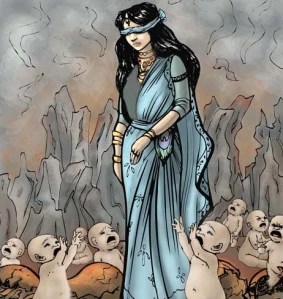
Battle Beyond Kurukshetra | P.K. Balakrishnan

Writer Jayamohan has extensively discussed and written about the novel ‘Ini Njaan Urangatte’, including during a discussion about his Venmurasu novel series at Ang Mo Kio library in 2016.

I didn’t think twice before borrowing this novel from the reference section of the library, which is allowed to be borrowed.

Jayamohan states that this novel is a deep lament; an emptiness. The emptiness that came after a loathed war. After the fierce conflict between the brothers had taken away everyone from this beautiful planet, this tranquil emptiness was an expression of overwhelming feelings. Agony and distress everywhere.

Karna is the protagonist of this novel, which tells the story of the aftermath of his tragic death in the Mahabharata. Karna was known for his unparalleled physical and mental strength and his ability to win over everyone with his charm. Despite his immense power, he ultimately lost and died. This story evokes the fascination of readers due to the unique circumstances of Karna’s life: despite being born into a high-status family, he was raised as the son of a charioteer, was ridiculed and shamed as a ‘suda-putra‘, and yet managed to remain righteous in the face of adversity, even when faced with difficult decisions. Karna’s story is sure to captivate any reader.

The novel begins with the death of Duryodhana, and within the first two paragraphs, it immerses the reader in its world. It is as if a tornado has swept us up, as the intensity of the scene draws us in. The novel enthralls its audience with the tale of Yudhishthira’s fraternal love. He is eager to uncover the truth behind Karna’s death, and he is filled with an overwhelming sense of guilt, despite other Pandava-s’ rage.

They questioned Yudhishthira, “Abhimanyu and the wise teachers who taught him battle strategies have perished, and Bhishma has fallen on a bed of arrows. Yet, you have never expressed sorrow for them, so why do you now grieve for your opponent Karna?”.

This novel contains exquisite places that evoke strong emotions in the reader.

  • The way author narrates the Narada’s rebuttal with Yudhishthira about Karna’s battle and the justice and injustice behind the same.
  • Meeting between Karnan and Kunthi
  • Meeting between Karna and Krishna
  • The humiliation of Draupadi
  • The agony of Duryodhana
  • The assasscination of Karna

The banks of the Ganges, ravaged by war, are a macabre sight during funerary ceremonies.

Kunti’s anxious expression appears intermittently throughout the novel. Upon learning that Karna is Yudhishthira’s elder brother, Kunti reveals the truth of his birth and requests him to perform the funeral rites for Karna first. Draupadi, like us, has many questions.

Why didn’t you let us know he was your son, Mom? Would it have been possible to prevent this devastating destruction if we had known about his family ties to you?

-Draupadi

During the Pandavas and Kauravas’ training in arms, the Pandava clan and their teachers humiliated Karna due to his birth reasons. Kunti fainted from her intense distress, but did not make any attempt to rescue him. Draupadi wanted to ask Kunti if she would react in the same way to Arjuna.

Yudhisthira was so overwhelmed with his love for his brother that he lost his calm. He wanted to throw away his bow and arrow and go into the forest. On the other hand, Kunti was grief-stricken by the death of her eldest son. The other Pandavas were taken aback when Karna humiliated them during the battle, yet gave them a chance to live.

As the Pandavas grieved for Karna, Draupadi – who harbored an intense resentment towards him – felt isolated. With her sibling and father gone due to the war, she had no one. The compassion the Pandavas felt for Karna, despite his having laughed at her humiliation, seemed paradoxical to her. She wondered if the anguish, deceit and sleepless nights she had endured had any purpose.

Krishna and Kunti reveal the secret of Karna’s birth to him not out of sorrow or affection, but rather to prevent an impending war of annihilation by convincing him to switch sides from the Kaurava camp to the Pandava camp. The scenes of Krishna trying to change Karna’s opinion are captivating.

I wish I had the ability to paint, my friends! If I did, I would have created a beautiful painting of Draupadi with the six Pandavas!

Draupadi questions herself; as a woman, she has grievances about the wrongdoing of her unrighteous husbands. She wonders what kind of dharma they are protecting by making her a pawn in the Hastinapur palace or during their exile. Draupadi’s flustered questions embody the essence of feminism.

She sees Karna’s death as a punishment for his betrayal. Despite her victory in the battle, she felt desolate. She deludedly questioned whether this was what she had wanted. Furthermore, Draupadi lamented her inability to care for her children as a mother. These are the emotional threads of this novel.

Krishna arrived in Hastinapur as a messenger, but was unable to prevent war and returned without success. Before departing, he met with Karna to disclose the truth of his birth. He tried to persuade him to transfer to the Pandava camp and become king, with Draupadi as his queen. However, Karna firmly refused and maintained his loyalty to Duryodhana, who had defended his honor in the Hastinapur arms skill event. When Karna thought about his foster mother Radha, I was brought to tears. I had to put the book down and close my eyes before I could continue. Despite Krishna’s attempts, he was unable to make him change his mind and had to go back.

Kunti encountered Karna while he was worshipping the Sun at midday and offering Dharma to those who are in need. She reiterated what Krishna had said.

It is a futile attempt to express longing for the dead by adorning the cremation bed with sandalwood. It is a senseless and cruel act of futility! Please let us finish this scene soon… What is your motivation for coming here? What should I do next? I am confident that I will agree with whatever you say, so please do not hesitate to provide me with your instructions and let us complete this quickly.

-Karna

The novel depicts Karnan conversing with her and holding back his anger with regret. Even though these are well-known stories, the way they are being narrated surprises the readers.

Karna is a Dharmavan, the elder Pandava and a responsible companion. But, he makes some mistakes. Due to unexpected situations, Draupadi has a grudge against him. She also refuses to marry him citing his birth. So, the deception on one side destroys the other!

As everyone was mourning the loss of Karna, Draupadi was in deep emotional distress, imagining an unexpected scene where she saw Karna seated on the throne and herself sitting by his side as his queen, surrounded by the other Pandavas, safe and secure. This vision occurred on the battlefield where so many had died, and the widows of the fallen were preparing their husbands’ funeral pyres. At one point, Draupadi felt as if she too was one of these widows. I was taken aback for a moment.

Let her rest with the worn-out deception and unfulfilled emotions. I will end my lament here!

ഇനി ഞാൻ ഉറങ്ങട്ടെ | Battle Beyond Kurukshetra | இனி நான் உறங்கட்டும்
Author– P.K Balakrishnan
(Malayalam – Ini Njan Urangatte)
Publisher – Sahitya Academy, First editin 2001
Borrow  NLB | Connemara Chennai
Buy: Malayalam | Tamil | English

This post is part of Blogchatter’s WRITE A PAGE A DAY 2023 campaign.

The mutilated Abhimanyu | Mahabharata Paintings

After the fall of Bhishma, Drona became the commander-in-chief of Kaurava army. Though he was a skilled Archer, teacher and master of war tactics, he could not get an opportunity to slay any of the Pandava-s to take revenge for Bhishma’s fall. Karna – who had vowed not to come to the battlefield under the leadership of Bhishma – had joined the army already. Krishna kept Arjuna at a distance from him, as Karna had the weapon to kill him.

Abhimanyu bids farewell to Uttara

As Kaurava-s did not get notable victory for Bhishma’s fall to Pandava’s foul play, Drona was under pressure when he came to battlefield on thirteenth day.

He formed a chakra-vyuga, a circular maze to trap Pandava-s. Yudhishthira fell as a prey. He got stuck inside the chakra-vyuga. Krishna, who was at far-away distance, blew his conch to seek help to save Yudhishthira from other Pandava-s. No one was able to help him. This is when the young upapandava Abhimanyu got into action.

Abhimanyu battling alone in the Chakravyuha

The chakra-vyuga intrigued him. His maternal uncle – Krishna – taught to him on how to save others from this round maze. But he did not teach him about how to eject oneself safely.

So he successfully broke the chakra-vyuga, scattered the warriors in the maze wall, and saved Yudhishthira. Before he accomplished his notable victory, he was surrounded and attacked by the brave warriors of Kaurava army, who were his own relatives.

Abhimanyu
Abhimanyu

Karna, Duryodhana, Drona were in front of Abhimanyu. His chariot, bows, sword and spheres were broken. Jeyamohan had portrayed this scene painfully in his novel kaar-kadal of Venmurasu novel series.

An unarmed teenage boy, fought bravely with a wheel of a chariot in his hand. He killed Laxmana Kumara – son of Duryodhana. Angered by this, Duryodhana asked Drona to move the target of Chakra-vyuga from Yudhishthira to Abhimanyu.

The Death of Abhimanyu

Arrows from Drona, Shakuni, Karna, Duryodhana stitched Abhimanyu and cut him into pieces. A brave boy – who fathered the next generation of Kuru clan – was killed tragically. Yudhishthira must have suffered the same fate instead of Abhimanyu. Dharma raja Yudhishthira got a life at the cost of his nephew!

  • The illustrated Mahabharata, Dorling Kindersley India, Penguin Random House, 1st Ed. 2017
  • The Mahabharata Set Of 10 Volumes, Bibek Debroy
  • Kaar kadal / Venmurasu by Jeyamohan

This blog post is a part of Blogchatter’s WRITE A PAGE A DAY campaign.

Yudhishthira, A Failed Gambler | Mahabharata Paintings

Duryodhana was jealous about Pandava‘s wealth. In addition, he got humiliated when he fell down into water at the palace of Indraprastha. By mistake, he thought Draupadi mocked him with derision. He wanted to take revenge for this. Shakuni – his maternal uncle – consoled him. He ensured him that he can win Pandava-s with the Chinese policy of winning without firing a bullet.

Kunti’s son loves to gamble with dice, but does not know how to play. If challenged to play, that Indra among kings will not be able to refuse. I am skilled in gambling with dice, there is no one on earth, or in the three worlds, who is my equal. Challenge Kunti’s son to a game of dice. O king! O bull among men! With my skill in dice?! there is no doubt that I will win for you the kingdom and the blazing prosperity. O Duryodhana! Tell the king?? all this. And if your father permits, there is no doubt that I will vanquish him.

Shakuni to Duryodhana – The Mahabharata Set Of 10 Volumes

Shakuni consoles Duryodhana

Yudhishthira had been invited to play a game of dice, a gambling for fun! It was considered as a “virtual war”. Whatever lost is lost. Yudhishthira – so called dharma – practiced adharma (sin) here. He risked insignificant things at first, later he lost everything one by one. Explaining the way he lost his wealth is not the motive of this post.

Mahabharata dice game

We need to understand the situation of the gambler who lost what he risked. With single game, he wanted to set right everything, he failed miserably again. At one point of time, he risks his brothers, then himself, then his wife Draupadi in the game, even though Vidura advised him to stop the game.

Mahabharata dice game

I like the face of Yudhishthira in the above drawing!

When he lost wife, Duryodhana summoned Pandava‘s wife and the queen of honour, Draupadi. Draupadi was mensurating then. Her question was logical. She asked if he lost him first before he lost her. If he lost him first, did he had any rights over her? Unfortunately, none of Pandava-s and Kaurava-s were logical. Kaurava-s acted out of the their suppressed wrath and Pandava-s acted with utter foolishness.

Draupadi's humiliation
Draupadi’s humiliation. Image (c) Keshav

Logical questions of Draupadi irritated Duryodhana – ‘the new possessor’ of the lady, as agreed by the son of ‘dharma‘, Yudhishthira. He asked Dushasana to bring her to court. The young Kaurava broke all the rules of women’s court, trespassed there, pulled Draupadi’s hair as hard as he can. Draupadi resisted, but she was no match to him. She tried to make him understand that she is Panchala puthri (daughter of Panchala) and daughter-in-law of their house. It did not change his mind. It was an explosive situation, everybody was in its flow. She has been pulled, dragged in front of public and brought to court with improper attire.

Draupadi's humiliation
Draupadi’s humiliation

Jeyamohan used to call it as ‘male-evil‘. It worked at its best. Duryodhana abused her to sit on his lap, as she is his slave, then. Kaurava-s told that slaves – Pandava-s and their wife – should not wear royal clothing. They made them undressed, including Draupadi. It was the greatest mistake to allow Dushasana to to disrobe Draupadi and challenged the modest of a woman, who was a queen, who was his own sister-in-law, who was a daughter in law of the greatest family of Bharatakhanda.

Draupadi dragged from her chamber
Draupadi's humiliation
Draupadi’s humiliation
Draupadi's humiliation
Draupadi’s humiliation

I do not believe the story of Krishna to issue the endless saree which made Dushasana to become tired. It was clean violation of modesty of woman in typical Indian way. Jeyamohan handled this piece in a more practical approach in his Mahabharata novel series, Venmurasu. It was Lakshmana – Duryodhana’s daughter – and other females of the royal family cover Draupadi with cloths by chanting the name of Krishna. ) I got into tears with much emotion when I read chapter 87 of Panniru Padaikalam novel of Venmurasu series.

The male evil will not stop its assault on female. We see that everyday. An innocent female get a rude husband and a soft male get an impudent wife. This seems to be naked truth.

I can point out several examples for such behavior from contemporary world as well.

  • A lady chief of a party was humiliated and disrobed in Tamilnadu assembly hall by the ministers of ruling party.
  • Lakbima – a popular Sinhalese daily printed vulger cartoon about a prime minister of India and a lady chief minister of Indian state
  • Acid was thrown at A lady IAS officer for being rough and tough by another political party in Tamilnadu

So, when a woman can not be won, a male will manhandle her habitually.

Except Bhima, every one in Kuru clan – including Bhishma, Dhritarashtra, Yudhishthira, Arjuna, Nakula, Sahadeva kept quiet. Even after such grave incident, Yudhishthira accepted to gamble. We can understand how addicted he is. He lost it too. In turn he needs to live in exile for thirteen years. With deep distress in mind, hiding his face from his own people, the great adharmi Yudhishthira, left the city.

Pandavas in exile
Pandavas in exile

Abusing Duryodhana and Dushasana for disrobing Draupadi is not new. But do we have a soft corner for Yudhishthira to escape from this crime?

  • Did he ever realize his mistake?
    Never. Even after this incident, he agreed to gamble. He lost that game also, in turn, entire Pandava-s were forced to live in exile for thirteen years.
    Pandavas in exile
  • Did he has any rights over Indraprastha on his own?
    No. Although he is a king, he can not be a dictator. Kingdom is made of people. A gambler who risks his own people is not a good king. Calling himself as a dharma is inappropriate.
  • Did he build the city in his own money?
    No. He is a beggar. The land belongs to his ancestors. Money to build the city came from Hastinapur, Panchala and Dwaraka. He did not give it back. Rather, he lost all of them to his addiction of gambling.
  • Did he discuss with Draupadi about gambling?
    No.
  • Did he love Draupadi, at least?
    IMHO, he is not a loveable man. He expressed himself as a pure opportunistic through out Mahabharata. He tried to find justifications from veda-s or smriti-s to cover up his selfish behavior. He is not skilled archer or wrestler or he did not excel in any martial arts. Draupadi was wife of Arjuna, by right. Yudhishthira shared among all by quoting so called Dharma.
    He might have felt inferior because of these reasons. This might have forced him to take extreme decisions during gambling, to prove himself. Alas, he miserably failed.

    Mahabharata text shows he used to praise Draupadi during different discussions. They look like a mode of public conduct – nothing else. I doubt if he loved his own wife Devika. No girl will love such a bored creature!
  • Did he respect advices of Vidura?
    No. Remember – he is the reason for Pandava-s to return alive from the house of lac.
  • Did he understand the effort in building Indraprastha?
    No.
    • It took many rounds of negotiations to get a land from Hastinapur. Pandava-s could not get it. It was Krishna who lobbied for them.
    • Khandavaprastha was a dense forest. Krishna and Arjuna put their effort in converting into a habitable land. They need to go on a war with Indra before doing it.
    • If Yudhishthira put any effort to build it, he might have given a second thought, before risking it on gambling.
  • If Draupadi married Karna, would he gamble her like Yudhishthira?
    • Krishna points out (during Pandava-s exile) that she too, reasonable for her own misery. As per his opinion, a great warrior like Karna will never gamble her away. But Draupadi rejected him during his Swayamvara on the basis of caste. Draupadi chose a priest in disguise over a charioteer. Unfortunately Arjuna, the priest in disguise, shared her among his brothers and gambled her. This is convincing for us.
  • Whom do we worship? Pandava-s or Yudhishthira?
    • Draupadi is the goddess for our society.

It is not Dushasana to be blamed first, it is Yudhishthira, the gambler!

References / Gratitude:

  • The illustrated Mahabharata, Dorling Kindersley India, Penguin Random House, 1st Ed. 2017
  • The Mahabharata Set Of 10 Volumes, Bibek Debroy
  • Panniru padaikalam, Jeyamohan

This blog post is a part of Blogchatter’s WRITE A PAGE A DAY campaign.

Draupadi’s Swayamvara | Mahabharata Paintings

The disguised Pandava-s lived in many places and forests. Bhima found a wife, Hidimbi in forests. Sage Daumya advised them to proceed to Panchala. Swayamvara of Panchala princess Draupadi was scheduled to happen. Invitations had been sent to many kings across the Bharata khanda. Pandava-s disguised themselves as Brahman-s (priests) and entered the Swayamvara hall.

There was a competition. Drupada formed a finely architected machine, which was rotating in the top, in which a golden fish was rotating by itself. Under this machine there was a cauldron filled with oil. The archers were challenged to shoot at the eye of the fish by looking at the oil in the cauldron below. It was complex. It was supposed to be broken by the best archers of the world. Many lost the game.

Picture credit: bhaskar.com

Duryodhana did not participate as he promised not to take any other wives other than Bhanumati. As everyone believed that Pandava-s were no more, Karna joined the competition. He could do it flawlessly. But Draupadi rejected him by pointing at his birth in low caste.

As all the kings failed, Drupada asked Brahman-s to join the competition. Arjuna came forward, he solved the puzzle with focus. He strung the bow and shoot the eye of the fish correctly. Drupada was happy. People were also happy. But kshatriyas were not. They objected a brahman to overtake them. There was a brief melee between Pandava-s and some of the kings like Karna and Shalya. Finally Krishna need to step-in to solve the conflict.

Arjuna-at-Draupadi-Arjuna at Draupadi’s Swayamvar Folk art Painting Fabric Art Prints. Picture Credit: MPRO-TECH
Arjuna at Draupadi's Swayamvara. Kalamkari Painting on Cotton - Artist - M. Viswanath Reddy (Andhra Pradesh)
Arjuna at Draupadi’s Swayamvara. Kalamkari Painting on Cotton – Artist – M. Viswanath Reddy (Andhra Pradesh)

Who can fight with Radheya Karna in battle except Rama, Drona, Sharadvata Kripa?! Devaki’s son Krishna and Phalguni, the scorcher of enemies? Who can fight against Duryodhana and who can vanquish in battle the powerful Shalya, king of Madra and chief among warriors, except the brave Baladeva and Pandava Vrikodara? Therefore, let us desist from this fight against the Brahmanas. Let us find out who they are and then we will happily fight with them again.” ….. “This lady has been won according to dharma.”

ராதேய கர்ணனுடன் ராமர், துரோணர், சரத்வாத கிருபரைத் தவிர வேறு யாரால் போரிட முடியும்?! … துரியோதனனை எதிர்த்து யார் போரிட முடியும், வலிமைமிக்க பலராமரையும், பாண்டவ விருகோதரனையும் தவிர? மத்ராவின் அரசனும், போர்வீரர்களில் தலைவனுமான சல்யனை யார் போரில் வீழ்த்த முடியும்? எனவே, பிராமணர்களுக்கு எதிரான இந்தப் போராட்டத்தை கைவிடுவோம். அவர்கள் யார் என்று கண்டுபிடித்துவிட்டு மீண்டும் அவர்களுடன் மகிழ்ச்சியாக சண்டையிடுவோம். ….. “இந்தப் பெண் தர்மத்தின்படி வெல்லப்பெற்றாள்.”

Krishna to the assembled kings, The Mahabharata Set Of 10 Volumes
Picture credit: jaypore.com

Arjuna won Draupadi.

References / Gratitude:

  • The illustrated Mahabharata, Dorling Kindersley India, Penguin Random House, 1st Ed. 2017
  • The Mahabharata Set Of 10 Volumes, Bibek Debroy

This blog post is a part of Blogchatter’s WRITE A PAGE A DAY campaign.

Varanavata palace | Mahabharata paintings

The feud between Pandava-s and Kaurava-s reached a stage where both will not gel any longer. Duryodhana did his best to justify his right over the throne. Vidura justified the right of Yudhishthira on the same. To stop any further escalation, Dhritarashtra suggested building a dedicated palace for Kunti and her sons.

He discussed this with Vidura. He agreed as well. The palace is built at Varanavata, which is far away from Hastinapur. It was near to forest and river Ganga. But the palace was made of lacquer, which is an inflammable material. Vidura understood the conspiracy behind the kind gestures of Kaurava-s.

O scorcher of enemies! From the smell of fat and ghee mixed with lac, it is clear that this house is made of inflammable materials. The evil Purochana has used trusted and well-skilled artisans to build a house with straw, bark and cane, sprinkled all over with ghee. After winning my confidence, he wishes to burn me to death. O Partha! This is the danger that the immensely intelligent Vidura foresaw and warned me about earlier.

எதிரிகளை எரிப்பவர்களே! கொழுப்பும், நெய்யும் கலந்த அரக்கு வாசனையிலிருந்து, இந்த வீடு தீப்பற்றக்கூடிய பொருட்களால் ஆனது என்பது தெளிவாகிறது. பொல்லாத புரோச்சனன், நம்பகமான மற்றும் திறமையான கைவினைஞர்களைப் பயன்படுத்தி வைக்கோல், பட்டை மற்றும் கரும்பு ஆகியவற்றைக் கொண்டு, நெய்யைத் தெளித்து ஒரு வீட்டைக் கட்டியிருக்கிறான். என் நம்பிக்கையைப் பெற்ற பிறகு, அவன் என்னை எரித்து கொல்ல விரும்புகிறான். ஓ பார்த்தனே! வெகு அறிவாளியான விதுரர் முன்னரே முன்னறிவித்து எச்சரித்த ஆபத்து இது.

Yudhishthira to Bhima, The Mahabharata Set Of 10 Volumes

Vidura warned Kunti about this. He asked them to escape through a tunnel, which connects the house of Lac to the nearby forest. It was built by Vidura to save Pandava-s. Kunti accepted the gift from Dhritarashtra as planned. As expected, the palace was burst into fire as soon as Kunti moved in with Pandava-s.

Lakshagriha
Lakshagriha

The tunnel – built by Vidura – saved Pandava-s. As per Vidura’s plan, five men and one woman were thrown inside the fire (Does dharma accept it?!).

Lakshagraha
Lakshagraha
Escape of Pandavas from Fire accident
Escape of Pandava-s from Fire accident
(c) The Illustrated Mahabharata – https://blog.abhinavagarwal.net

Hastinapur mourned the death of Kunti and Pandava-s. Kaurava-s relieved from their worries, unaware of the survival of their cousins.

References / Gratitude:

  • The illustrated Mahabharata, Dorling Kindersley India, Penguin Random House, 1st Ed. 2017
  • The Mahabharata Set Of 10 Volumes, Bibek Debroy

This blog post is a part of Blogchatter’s WRITE A PAGE A DAY campaign.

The birth of Dhritarashtra’s sons | Mahabharata Paintings

Kunti became a mother first. As a sister-in-law, Gandhari felt insecured about the throne now. The agony and trauma experienced by Pandu earlier, apprehended Gandhari’s mind now. The thoughts about the chief chair of Hastinapur bloated everyone’s mind.

Gandhari conceived well before Kunti. But she did not give birth. Hapless Gandhari did not find a way. She had been pregnant for 2 years already. With conscious volition, she decided to give birth forcefully. She ordered her maids to strike her belly with an iron bar. No one had the temerity to question her. Though the hesitated, they tended to hit her. There comes the fate.

Vyasa and Gandhari
Vyasa and Gandhari

She did not give birth to a boy or a girl. It was a sphere of flesh with pulse for life. As per Sage Vyasa’s suggestion, the piece was broken into 100 pieces and stored inside different pots with Ghee inside. Poor Gandhari wanted a girl baby as well. So it was broken into 101 pieces and incubated.

When I heard that Kunti had given birth to her first son, as radiant as the sun, I struck my belly in grief. Earlier, you granted me the boon that I would have a hundred sons. But instead of those 100 sons, this mass of flesh has been born to me.

சூரியனைப் போல பிரகாசமான தன் முதல் மகனை குந்தி பெற்றெடுத்தாள் என்று நான் கேள்விப்பட்டபோது ​​துக்கத்தில் என் வயிற்றில் அடித்தேன். இதற்கு முன், எனக்கு நூறு மகன்கள் பிறக்கும் வரம் தந்தீர்கள். ஆனால் அந்த 100 மகன்களுக்குப் பதிலாக இந்த சதை நிறை எனக்கு பிறந்துள்ளது.

Gandhari to Vyasa, Adi Parva, , The Mahabharata Set Of 10 Volumes
Gandhari
Gandhari

Sage Vyasa assured her the flesh pieces would be changed to children in an year. After an year, first pot was broken. There comes a boy. Gandhari named him as Duryodhana. Over the period rest of the incubators are broken too. The story is like eggs and chicken, isn’t it? Finally there is a girl baby. She named her as Dusshala.

O Subala’s daughter! It will be as I have said and not otherwise. I have never uttered a falsehood in jest. Why should I do it when I am in earnest? Quickly bring a hundred pots and fill them up with ghee. Let cool water be sprinkled on this mass of flesh.

ஓ சுபலரின் மகளே! நான் சொன்னபடியே இருக்கும், மற்றபடி இருக்காது. நான் ஒருபோதும் (பிறரின்) மகிழ்ச்சிக்காகப் பொய் சொன்னதில்லை. நான் ஆர்வமாக இருக்கும்போது அதை ஏன் செய்ய வேண்டும்? சீக்கிரம் நூறு பானைகளைக் கொண்டு வந்து நெய் நிரப்பு. இந்த சதையின் மீது குளிர்ந்த நீர் தெளிக்கப்படட்டும்.

Vyasa to Gandhari, Adi Parva, , The Mahabharata Set Of 10 Volumes
Gandhari, the great mother

In addition, Dhritarashtra had a son – Yuyutsu – with a Vaishya maid Sughada. He was grown along with Gandhari’s children as well.

Here is the birth of Kaurava-s.

References / Gratitude:

  • The illustrated Mahabharata, Dorling Kindersley India, Penguin Random House, 1st Ed. 2017
  • The Mahabharata Set Of 10 Volumes, Bibek Debroy

This blog post is a part of Blogchatter’s WRITE A PAGE A DAY campaign.