Battle Beyond Kurukshetra | P.K. Balakrishnan

Writer Jayamohan has extensively discussed and written about the novel ‘Ini Njaan Urangatte’, including during a discussion about his Venmurasu novel series at Ang Mo Kio library in 2016.

I didn’t think twice before borrowing this novel from the reference section of the library, which is allowed to be borrowed.

Jayamohan states that this novel is a deep lament; an emptiness. The emptiness that came after a loathed war. After the fierce conflict between the brothers had taken away everyone from this beautiful planet, this tranquil emptiness was an expression of overwhelming feelings. Agony and distress everywhere.

Karna is the protagonist of this novel, which tells the story of the aftermath of his tragic death in the Mahabharata. Karna was known for his unparalleled physical and mental strength and his ability to win over everyone with his charm. Despite his immense power, he ultimately lost and died. This story evokes the fascination of readers due to the unique circumstances of Karna’s life: despite being born into a high-status family, he was raised as the son of a charioteer, was ridiculed and shamed as a ‘suda-putra‘, and yet managed to remain righteous in the face of adversity, even when faced with difficult decisions. Karna’s story is sure to captivate any reader.

The novel begins with the death of Duryodhana, and within the first two paragraphs, it immerses the reader in its world. It is as if a tornado has swept us up, as the intensity of the scene draws us in. The novel enthralls its audience with the tale of Yudhishthira’s fraternal love. He is eager to uncover the truth behind Karna’s death, and he is filled with an overwhelming sense of guilt, despite other Pandava-s’ rage.

They questioned Yudhishthira, “Abhimanyu and the wise teachers who taught him battle strategies have perished, and Bhishma has fallen on a bed of arrows. Yet, you have never expressed sorrow for them, so why do you now grieve for your opponent Karna?”.

This novel contains exquisite places that evoke strong emotions in the reader.

  • The way author narrates the Narada’s rebuttal with Yudhishthira about Karna’s battle and the justice and injustice behind the same.
  • Meeting between Karnan and Kunthi
  • Meeting between Karna and Krishna
  • The humiliation of Draupadi
  • The agony of Duryodhana
  • The assasscination of Karna

The banks of the Ganges, ravaged by war, are a macabre sight during funerary ceremonies.

Kunti’s anxious expression appears intermittently throughout the novel. Upon learning that Karna is Yudhishthira’s elder brother, Kunti reveals the truth of his birth and requests him to perform the funeral rites for Karna first. Draupadi, like us, has many questions.

Why didn’t you let us know he was your son, Mom? Would it have been possible to prevent this devastating destruction if we had known about his family ties to you?

-Draupadi

During the Pandavas and Kauravas’ training in arms, the Pandava clan and their teachers humiliated Karna due to his birth reasons. Kunti fainted from her intense distress, but did not make any attempt to rescue him. Draupadi wanted to ask Kunti if she would react in the same way to Arjuna.

Yudhisthira was so overwhelmed with his love for his brother that he lost his calm. He wanted to throw away his bow and arrow and go into the forest. On the other hand, Kunti was grief-stricken by the death of her eldest son. The other Pandavas were taken aback when Karna humiliated them during the battle, yet gave them a chance to live.

As the Pandavas grieved for Karna, Draupadi – who harbored an intense resentment towards him – felt isolated. With her sibling and father gone due to the war, she had no one. The compassion the Pandavas felt for Karna, despite his having laughed at her humiliation, seemed paradoxical to her. She wondered if the anguish, deceit and sleepless nights she had endured had any purpose.

Krishna and Kunti reveal the secret of Karna’s birth to him not out of sorrow or affection, but rather to prevent an impending war of annihilation by convincing him to switch sides from the Kaurava camp to the Pandava camp. The scenes of Krishna trying to change Karna’s opinion are captivating.

I wish I had the ability to paint, my friends! If I did, I would have created a beautiful painting of Draupadi with the six Pandavas!

Draupadi questions herself; as a woman, she has grievances about the wrongdoing of her unrighteous husbands. She wonders what kind of dharma they are protecting by making her a pawn in the Hastinapur palace or during their exile. Draupadi’s flustered questions embody the essence of feminism.

She sees Karna’s death as a punishment for his betrayal. Despite her victory in the battle, she felt desolate. She deludedly questioned whether this was what she had wanted. Furthermore, Draupadi lamented her inability to care for her children as a mother. These are the emotional threads of this novel.

Krishna arrived in Hastinapur as a messenger, but was unable to prevent war and returned without success. Before departing, he met with Karna to disclose the truth of his birth. He tried to persuade him to transfer to the Pandava camp and become king, with Draupadi as his queen. However, Karna firmly refused and maintained his loyalty to Duryodhana, who had defended his honor in the Hastinapur arms skill event. When Karna thought about his foster mother Radha, I was brought to tears. I had to put the book down and close my eyes before I could continue. Despite Krishna’s attempts, he was unable to make him change his mind and had to go back.

Kunti encountered Karna while he was worshipping the Sun at midday and offering Dharma to those who are in need. She reiterated what Krishna had said.

It is a futile attempt to express longing for the dead by adorning the cremation bed with sandalwood. It is a senseless and cruel act of futility! Please let us finish this scene soon… What is your motivation for coming here? What should I do next? I am confident that I will agree with whatever you say, so please do not hesitate to provide me with your instructions and let us complete this quickly.

-Karna

The novel depicts Karnan conversing with her and holding back his anger with regret. Even though these are well-known stories, the way they are being narrated surprises the readers.

Karna is a Dharmavan, the elder Pandava and a responsible companion. But, he makes some mistakes. Due to unexpected situations, Draupadi has a grudge against him. She also refuses to marry him citing his birth. So, the deception on one side destroys the other!

As everyone was mourning the loss of Karna, Draupadi was in deep emotional distress, imagining an unexpected scene where she saw Karna seated on the throne and herself sitting by his side as his queen, surrounded by the other Pandavas, safe and secure. This vision occurred on the battlefield where so many had died, and the widows of the fallen were preparing their husbands’ funeral pyres. At one point, Draupadi felt as if she too was one of these widows. I was taken aback for a moment.

Let her rest with the worn-out deception and unfulfilled emotions. I will end my lament here!

ഇനി ഞാൻ ഉറങ്ങട്ടെ | Battle Beyond Kurukshetra | இனி நான் உறங்கட்டும்
Author– P.K Balakrishnan
(Malayalam – Ini Njan Urangatte)
Publisher – Sahitya Academy, First editin 2001
Borrow  NLB | Connemara Chennai
Buy: Malayalam | Tamil | English

This post is part of Blogchatter’s WRITE A PAGE A DAY 2023 campaign.

JJ: Some Jottings | Sundara Ramaswamy [Book Review]

The novel starts with a breaking news of the dealth of Malayali writer J.J. The story is narrated by another writer Balu.

I wondered, whether to call it as a novel or a collection of memoirs of Writer J.J. from different personalities. I read Jeyamohan’s vishnupuram novel before I took this. I had feeling of empathy on myself, due to my inability of not getting into its Indian philosophical debate. At that state, I was expecting another typical novel, which gives the sequence of different events which moves towards an end. It was not structured like that.

It starts with a philosophical elaboration. After 30 or 40 pages, it absorbs us into it completely. Writer Balu wants to write about J.J. He make efforts to know about him before doing so. He meet different personalities, he get the opinions from them. JJ sounds like an idealistic, impactical, melancholic…. So, different knots formed in the first part of novelm, when different characters speak about him. they are cleared in the second part of the novel, as JJ himself starts speaking.

The entire novel is written in an circastic tone. Despite the plot is described as Malayalam literary world, Sundara Ramasamy hits the nail at the head of Tamil literary world and its hipocrisy.

JJ mocks hipocrasy at many places – Ottapalam Karunakaran’s surprise of a lady character in cross roads in a french novel; the bogus agony of chittukuruvi’s condolence speech – we can quote many of such incidences.

Our surrounding is hipocratic. We like to others swindling us all the time. We are in a stage where we consider that as the normal. I am from Tamilnadu, where defaming hinduism is disguised as aethism. Despite the political preaching, politicians used to file their nominations on ‘amrit kaal’. Kerala is where you can find Communists living inside Multi storey bungalows. We should not talk about Religion, at the same time, we can not give up my caste.. Wow.. No wonder, JJ grimaces at the glimmer of such shabby smugs.

Apart from the sarcasms, it pushes the reader to think and search for the real character of JJ. The novel ends at a place where the user is convinced that JJ was searching for truth among those these delusive literary whoops.

Reserve in NLB Jē. Jē. : cila kur̲ippukaḷ

Buy in English | Tamil

This post is part of Blogchatter’s WRITE A PAGE A DAY 2023 campaign.

Launch Pad | Shelly Bryant [Book Review]

While science fiction isn’t typically my genre of choice. It is not about the choice or interest. It is about the patience to grasp the full potention of the fiction and create a scene in mind. I may not have that expertise and patience.

I purchased this short story collection for Kannan. Upon reading it, I found that some of the stories were too complex for me to fully grasp, while others felt excessively localized. However, there were also several stories that I thoroughly enjoyed.

When authors are required to write stories that are bound to a specific location, they often use localized names for characters and venues. Unfortunately, such stories often fail to make a lasting impact and fade away over time. Some of the stories in this collection, Launch Pad, seemed to fall into this category.

I attended the book release function for this collection and was curious to read the science fiction stories. One of the challenges that science fiction writers face is that science has already advanced so much beyond the fictional boundaries within which they operate. This was something that struck me when I watched James Bond movies and was amazed by the futuristic technology. Though I recall getting excited about the sci-fi comics in Rani Comics during my childhood, we now live in a world where driverless trains and automatic buses are commonplace. (except in Chennai Metro where they still use outdated technology and take pride in it). I could realize that the author tried her best to surpass this difficulty.

There were several stories in this collection that captured my attention. ‘Tan Swee Nee, Barber’ was particularly frightening, while ‘Case Study: Training Programme’ surprised me with its use of Tamil words like ‘Thaai’ and ‘Thanthai’, which are typically replaced by ‘Amma’ and ‘Appa’. Tamil is a complex language with many idiosyncrasies that can be difficult for non-native speakers to navigate.

Launch Pad is a collection of 13 science fiction short stories set in Singapore, written by Shelly Bryant, a poet, writer, and translator. Her mastery of language is evident in all the stories, and this is her first fiction collection.

Buy Epigram | Amazon | Google | Kobo

Borrow NLB

This post is part of Blogchatter’s WRITE A PAGE A DAY 2023 campaign.

[Book Review] Arogya Niketan | Tarasankar Bandyopadhyay

A significant portion of modern medical resources and funding is directed towards prolonging human life, as reported in an article. As we live in an age of transplant surgeries, reading this novel is sure to provide an exceptional reading experience. I highly recommend it, as it is one of the finest novels I have read to date.

Arogya Niketan (translated to Tamil as ஆரோக்ய நிகேதனம்) – Tarashankar Pandyopadhyaya
Translation – T.N. Kumaraswamy
Publisher – Sahitya Akademi, First Edition 1972, Second Edition 2015
To reserve in NLB – Ārōkkiya – nikētan̲am
To read Writer Jayamohan Introduction
Buy in Bengali, Tamil

Ten days ago, I visited the Ang Mo Kio Library and saw a Tamil translation of this novel on the new arrivals display. I borrowed it. The story set in a village in Bengal that has an Ayurvedic center. The main character, Jeevan Thattar, is the center’s doctor who learned the ways of Ayurvedic medicine from his father and practices it with the belief that death is inevitable and his medicine is meant to fight diseases, not death.

Dr. Pradyod, a young allopathic doctor working at the government hospital in the same village, disagrees with Jeevan’s approach and often criticizes him. Despite their differences, both doctors come together to treat patients, with Jeevan correcting cases that Pradyod missed and vice versa. The novel showcases their growing friction as a result of the generation gap.

Jeevan Thattar is depicted as a wise and experienced doctor, who dropped out of allopathic studies due to his love for Manjari. Despite facing setbacks in his life, his passion for medicine never faded, and he always remains curious about new advancements in the field. Despite being criticized by some patients for predicting their death, Jeevan continues to practice medicine, even if it means treating just one patient at an odd time.

Pradyod, on the other hand, is depicted as a vibrant and ambitious young doctor who is determined to prove Jeevan wrong. However, as he gains more experience, he realizes the importance of Jeevan’s approach and the two doctors come together to treat patients.

Athar Bau, Jeevan’s wife, is portrayed as an unhappy woman who scolds Jeevan for his predictions of death and for selling all their property in vain. Despite her scoldings, she is not cruel, and her anger stems from the fact that Jeevan is seen as a curse by the villagers.

The protagonist, Jeevan, is depicted as a man who is always curious about death and its form. He desires to understand death and is always eager to learn about new advancements in medicine. Despite his age, he remains a curious child who is fascinated by germs shown in microscope and the effectiveness of new drugs.

The novel touches upon various aspects of death, including untimely deaths and how different people cope with it. The heartwarming scene is when Jeevan feasts Abaya, despite realizing that her husband is going to die. This scene highlights Jeevan’s compassion for his patients and his role as a doctor beyond just treating illnesses.

It is difficult to express in words the situation where Jeevan Masai takes his naadi (pulse) and confronts his final day. The writer’s ability to capture this difficulty evokes a strong emotional response from the reader. Masai is torn between his desire to go to the banks of the Ganges and his concern for Athar Bau, who he sees as vulnerable and helpless. This part of the novel left me spellbound, and my eyes filled with tears as Athar Bau spoke at the end.

The novel highlights the human emotion and the longing for recognition of an old-fashioned physician. It presents the dilemma of living life on one’s own terms versus trying to control it according to one’s preferences.

The author, Tarasankar, was a highly acclaimed Indian novelist who wrote 65 novels during his career. He received numerous awards, including the Rabindra Puraskar, Sahitya Akademi Award, Jnanpith Award, Padma Shri and Padma Bhushan.

The translation into Tamil by Mr. Kumaraswamy is fluent and accurate, but the book contains several typographical errors.

This post was originally Written on 26 Sep 2015. Translated to English as part of Blogchatter’s WRITE A PAGE A DAY 2023 campaign.

Book Review | Who Moved My Cheese by Dr Spencer Johnson

Haw said, “Sometimes, Hem, things change and they are never the same again. This looks like one of those times. That’s life! Life moves on. And so should we.”

Who Moved My Cheese p 45

“Who Moved My Cheese?” by Dr. Spencer Johnson is an intriguing fiction that portrays the different behaviors of people during change in an engaging manner. The 90-page story takes place in a maze and features two mice and two small humans, each possessing their own unique character. The book is written in a simple style, as if a grandmother were narrating to her grandchildren, but it is suitable for readers of all ages, including teenagers. It is a must-read for college students and busy professionals, and I often heard the title mentioned among MBA students during my college days. I recently read the book myself.

The story of three types of fish – the one which is smart and precautionary, the one that only considers danger when it arrives, and the one that never cares about danger – is often heard during our childhood. This is similar to the story told in “Who Moved My Cheese?” One of the key takeaways from the book is that change is inevitable and we must be prepared for it. How quickly we sense change and react to it determines our safety. The book illustrates the importance of adapting to change and how failure to do so can negatively impact our lives.

This book is inspiring because it depicts the character Haw’s ability to adapt to change. He tries to motivate his fellow human Hem by providing him with clues during his search. These clues serve as key messages for us to adapt to change as well. Embracing change quickly is not always easy, but consistent effort will lead to success. Any missteps along the way should be viewed as learning opportunities.

To conclude, “Who Moved My Cheese?” is a must-read for professionals and students who are looking to improve themselves. This inspiring book highlights the fast-paced nature of the changing world and provides insights on how to adapt to these changes. Each page is filled with positive and inspiring words written in a simple manner. By imagining how good you would be after the change, you can reduce the fear and keep moving forward. It is a visionary thought that I hope will also be helpful to you, my dear reader.

Buy in amazon

Reserve in NLB

Apple Books

Kobo

This blog post is a part of Blogchatter’s WRITE A PAGE A DAY campaign.

Coping with Fake News and Disinformation – Devlin Smith | Book Review

Everybody needs information. After the dot-com discovery, there is a massive inflow of information in the world. Every stakeholder wants to meddle and control this flow. They do not hesitate to sugar-coat, malign or even spread rumours. Fake news wave flows across all tiers of the society.

I know someone in a village, who killed and cooked all his pet chickens. Because somebody told him that world will be no more in 2000. After media is run for profit by private players, journolists starts targeted bullying to bring down their opponents. Governments wants to control the press as much as they can. If not, it tries to adjust the flow of news using its moles inside. On this background, I would like to write about a book, I borrowed recently from library as part of #TBRChallenge by Blogchatter.

The pouring of news in dailies/TVs/social media are all poured by different parties based on their own interest. When it is in aligned with our view, we believe it is true. In addition, we starts sharing with our circle without verifying.

Fact-verifying is another jiggery-pokery. It can’t be 100% right always. On the other side, fact-checking all news is not practically not possible at all.

In this case, making juveniles aware of the news process, news consumption becomes important. That is what this book tries to do. ‘Coping with Fake news and Disinformation’ written by Devlin Smith.

This book has 6 chapters.
A Free Press
Making the news
Faking the news
Finding the truth
Information overload
Consuming the news.

It starts approaching the false news behaviour from the historical background. The book ends where it tries to create awareness of how to consume the news. Author tries to target the teens to create media awareness. So the book is pleasingly stitched with bigger fonts, colourful typesetting and interesting pictures. I liked the chapter that describes the fake news that provocated America and Spain to burst into a war.

I think this book will be of interest of socially-aware teens.

To write about the author, Devlin Smith, writes across different genres for the past 2 decades. She studies English with Journalism as specialization.

Name of the book: Coping with fake news and disinformation
Author: Devlin Smith
Publisher: New York : Rosen Publishing,2020.
Genre: Juvenile Literature – Media literacy. Fake news.
ISBN: 9781725341203
NLB | Amazon

I’m participating in the #TBRChallenge by Blogchatter. With this, I wrap up this challenge as well as 2022. See you in 2023.

Stories of the true – Jeyamohan | Book Review

Top post on Blogchatter

The society is not fit for innocents. It is as dark as we can’t even imagine sometimes. It is the land where charities were made out of business money. What forces someone to pay back to society? It is dharma aram in Tamil. The victory of Mahabharata war is justified based on aram. Duryodhana has his own justifications where as Yudhishthira has his own. The injustice and humiliations of Draupadi made the Yadava chief choose Yudhishthira’s side – accepted aram!

Aram was the theme of Singapore Writer Festival 2017, where writers from different parts of the world persuaded this topic. Everybody has their own interpretation of aram to justify their stand. There comes the deadlock. We believe, the one which benefits the victim, is the right aram or righteousness.

I write about the one of the finest short story collections of Jeyamohan – Stories of the True, as part of #TBRChallenge by Blogchatter. This is the translation of his Tamil collection Aram. It talks about different personalities, who are real persons in the writer’s known circle and their attempts to ensure justice or righteousness.

This collection contains the iconic stories Elephant Doctor and A hundred arm chairs. Many of the stories would disturb the readers as it has a concentrated extract of painful hearts of our society.

I read A hundred arm chairs in Tamil a few years ago and blogged here. Still, I can’t resist reading it once again. I can totally absorb the mental agony of a son, a mother, a society, and the conflict around them. The agony of the mother became paradoxical with her son. The struggle between them pierced the reader inch by inch.

Elephant Doctor is something to be kept as a compulsory school read. Liquor has been made a fast-moving consumer good by the companies and the Government. Having money to travel to forests and waterfalls, consume liquor, break the glasses, create a ruckus is wrongly perceived as a ‘status building’ or ‘socialization’. But the pain created by desperadoes is something no one acknowledges.

I was moved by ‘Aram – The Song of Righteousness‘ and ‘The meal tally‘. Such stories show the gems out of a stereotypical society. ‘One world’ reminds me of Jayakanthan’s Tamil novel ‘oru manithan – oru veedu – oru ulagam‘.

Nutcase‘ was so closer to my heart because those who struggled for Indian freedom and those who got benefit out of it are different. The regents of Indian democracy showed an overt act of suppression on the whistle-blowers.

I recommend this book to get the a memorable reading experience. It will help us to reevaluate ourselves.

About the author and the translator:

Apart from what is written in Wikipedia, he is one of the best writers of Tamil literature. Apart from his writings, he engages his readers on a daily basis. He used to take a stand, clearly justifying the reasons behind it. He spent an enormous amount of days writing a full-fledged Mahabharata as a novel series called venmurasu, which was released on a daily basis for free. I was one of the readers who followed this novel till the end.

Translating Jeyamohan’s language is a challenge for any translator. In that way, Priyamvada Ramkumar had done her best.


Name of the book: Stories of the true.
Author: Jeyamohan B
Translator: Priyamvada
Publisher: Juggernaut Publication
Genre: Short story collection
ISBN: 9393986177
Amazon

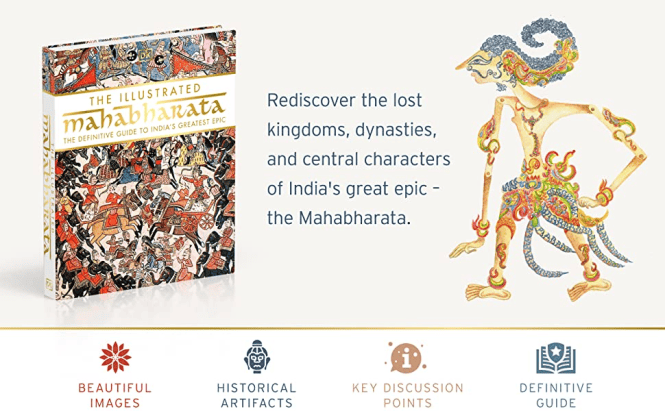
The Illustrated Mahabharata – Book Review

Mahabharata does not need an introduction. When we see the scenes with naked eyes, offer our minds a solvency from the monetary outfit of modern day society. Mahabharata admires every one of us. It looked to me like a story of the ramparts when I was a kid. When the read the latest version of Mahabharata novel series in Tamil – Writer Jeyamohan’s Venmurasu, the scourge of mass destruction, ego and humiliation stench all over the journey.

I saw this book in Chennai airport one day. That was the time Venmurasu was being released every day. I was one of the proud followers. On seeing this book on display, I had no other thoughts.

Name of the book: The Illustrated Mahabharata, The definitive guide to India’s greatest epic.
Editors: Bushra Ahmed, Rajrupa Das, Medha Gupta, Hina Jain, Seetha Natesh, Rupa Rao
Genre: Epic/Paintings
Buy from Amazon
ISBN : ‎ 978-0-2412-9972-2

Picture (c) amazon.

This post is written as part of #TBRChallenge

About the book

But it took me a month to read the whole book, because of the proximity of the characters brought by those illustrations. It has a collection of paintings from different sources.

One tale in every 2 pages generally. The pages are ornamented with paintings. The books starts at the Adiparva with the snake sacrifice (Sarpa sastra). The illustration from Razmnama stupors the reader.

There are 18 chapters to take the reader across all parva-s.

The book quotes the verses from the epic; it shows the family tree. It brings us paintings, carvings, and other art forms across the world.

Why I recommend this book?

  • This book is a nice story teller. You can leave it in the hands of kids of age 10+. They will get a memorable exposure to the Mahabharata stories starting all the way from Budh, Pururavas, Dushyanta etc.
  • To enjoy Krishna’s stories from Harivamsha.
  • We understand how Mahabharata is being admired by different part of the globe.
  • It is an excellent coffee table book to engage your guests.

Naan Nagesh – நான் நாகேஷ் – Book Review

The history of Tamil cinema cannot be written without Nagesh. Nagesh has left his unique way of his body, mouth and eye language. He was captivated as a promising actor and protagonist by Director Sridhar and K Balachander. So stamping him as a comedian is like an attack on his personality. He was a full fledged actor who acted in different roles like comedian, hero, villain and supporting actor. He was super busy in the industry to the extent of participating in the shooting of two to three film companies on same day. It was written like, many cars of different film companies will be waiting for him. Whatever the car he chose, will be followed by the rest, to take him to the other shooting spots. He was also the one abandoned by the same film industry. He has also been overlooked by the award committees of Government of India.

About the book

The newsletter from Kizhakku Pathippakam had information about ‘Nan Nagesh’. It was also in Amazon Prime Reading. It was written in a very simple (spoken) style so I was able to read it quickly.

Nagesh said that he was proud of his beauty at his young age. He thinks that he was punished by God for losing his face due to the subsequent measles for boasting his beauty. He has been humiliated in various places due multiple scars of chickenpox on his face.

He has worked in various places like factory, supermarket, drama companies and Indian Railways. Two kind of people can not stick to same job for long time. One – who does not know any work. Another one – someone who is not interested in doing same job repeatedly. Nagesh is of the second type. Even more, his interest in acting has pushed him into the screen industry.

Facial makeup is more addictive than alcohol.

-Nagesh

He faced various insults. So he nullified them over by his unique way of acting.

T.M.S. tried to know the actor for whom he will be singing. He used to mimic his voice while singing the songs. Accordingly, he asked “For whom I am singing this song?”. M.S. Viswanathan said “Nagesh”. On hearing the name, T.M.S. Laughed jokingly to say “I sing for him? Should I sing it? Such a big setup for him?” in a tone T.S. Balaiya’s dialogue of Thiruvilaiyadal.
……
One day I was going for a walk on the beach. Then I met T.M.S. On seeing , he said “You won sir!, I said that the song will not be well received and there will be no one in the theater. Anyway, I heard that people watch the movie just because of that Song. I’m Happy sir” and greeted before he left.

A.V.M Kumaran,  Dhina Thanthi

This book is a compilation of auto-biography articles published in Kalki magazi with the title ‘Sirithu vaazha Vendum’.

Why this book is important?

Nagesh does not talk much. He does not have much media exposure like present day actors. This is a book containing 58 biographical articles to document his words.

It is written in a easy-reading style

Nagesh’s view on other artists (Director Sridhar, Actor Balaji, MGR, Sivaji, Rajini, Kamal, MR Radha, Manorama, Poet Vaali etc)

Could have done more

This book seems to be written with some restrictions to keep it simpler. Nagesh had concerns about the National awards avoiding Tamil artists. He raised his voice in an interview in The Hindu that Actor Sivaji Ganesan in particular was not given a good recognition by Delhi. These were not found anywhere in this book

This may be okay for the light readers of the magazine. The book should have shed more light on his personality to suit different set of readers.

Conclusion

Nagesh is no more. No further attempt is going to take place. In that sense, thanks to the effort of S Chandramouli to record his words.

As far as I am concerned, actor Nagesh deserves any major award presented in Cinema. If he was born in France, America or Germany, I can guess the kind of recognition he would have received. Despite 12 years having passed since his death, the government continuing to ignore him is a disappointment

Kamal Hassan, The Hindu, September 28, 2021,

Naan Nagesh – நான் நாகேஷ் (autobiography)
Publisher : Kizhakku
Writer : S Chandramouli
Language: Tamil
Price : ரூ. 239 / Kindle Prime / Kindle Unlimited
ISBN-10 ‏ : ‎ 8184935625
ISBN-13 ‏ : ‎ 978-8184935622

The Long Game: How the Chinese negotiate with India – Book Review

Politically, the world has many serpents. Not all of them are lucky enough to be venomous. But the one with the most poisonous fangs, influences the group of other serpents.

When we see the world has more than one serpent, there comes a conflict. How easy is to solve such conflicts between the two? Either by a war or by a dialogue! Dialogue is no way less than war, as it requires similar tactics and arriving at similar conclusions. These serpents have a habitual action of breaking treaties, while admonishing others. I am reviewing a book which describes the complexity of negotiation between two such Asian snakes – India and China.

Name of the book: The Long Game: How the Chinese negotiate with India
Author: Vijay Gokhale
Genre: Political/External Affairs
Borrow in NLB
Buy from Amazon
ISBN-10 ‏ : ‎ 0670095605
ISBN-13 ‏ : ‎ 978-0670095605

About the book

The Long Game‘ presents a chronology of Indian relation with Chinese Government and the Communist Party of China. It has seven interesting chapters which includes the following.

  • How the newly formed Indian republic was in a hurry to recognize Chinese communists, who had toppled the previous nationalistic Government.
  • How India lost its privileges over Tibet without gaining anything.
  • How India was able to overcome Chinese plot to isolate it after Pokhran nuclear tests.
  • How China delayed recognizing the annexation of Sikkim and India persuaded them to agree.
  • How India got access to nuclear energy sources by limiting Chinese tactics to keep India away.
  • How China delayed and how India was able to get its approval to sanction Masood Azhar at the UN.
  • And finally, the extract of author’s best practices.

Why do I recommend this book?

When I was in a shopping center on Sukhumvit Road in Bangkok, I liked a ladies bag. I thought it was the most beautiful thing I could purchase in this universe. The seller sensed it. He did not reduce a single penny. My colleague said that I should not have expressed my eagerness to buy the product. When the seller senses the pulse of the buyer, he will not reduce his price.

The way India recognized China after the communists of China toppled the Government and took over the crown. They were in need of international recognition. India, lead by Jawaharlal Nehru, wanted to ‘join the asian jyoti‘ and offered all his support to the Government formed by the insurgents, without any benefit to the Indian side. Nehru and his ambassador negotiated as I did, with the Bangkok Bag seller. It was a one-sided love of Nehru for China. He looked at them as friends; they suspected him. The worst part is Nehru did not even realize that they suspected his love!

The author expresses his grievance on how the new Indian government’s inexperience in external affairs in the 1950s, lost many of its natural rights instead of gaining something. In addition, the author lists down the different tactics followed by the Chinese, to delay or stop any progress that affects their long term interests. I was amazed to see they were able to block Indian attempts to sanction Masood Azhar for a decade, to save its partner Pakistan, which is not worth a naya-paisa.

The way they prepared for the meeting by borrowing time, their process-driven approach against the ad-hoc approach by the Indian side, were all good lessons for anyone, who is in position to negotiate with third parties. The way Indian side has transformed itself over the years based on different experiences looks positive. We can realize the commitment of the author to inculcate his knowledge into young IFS officers.

India started its journey like a frog – one that screams and identifies himself as prey to a hungry snake – in the 1950s. Its experience in external affairs was frail and vulnerable. The synergy was missing. Nehru influenced decisions on the ground in a hurried manner without weighing the risks. But India tries to catch up by its learnings over the past.

This book provoked me to compare the Chinese strategies described in this book with recent incidents. We could see amazing similarities.

Chinese president came to Gujarat on an official visit to meet Indian PM on Sep 2019. On the same month, there has been a complaint of incursion of Chinese army as long as 100 KMs. When the same man visited Tamilnadu, he should have been preparing for an invasion of Eastern Ladakh. Even after we lost our lives in the butchery of Galwan valley, Delhi did not pronounce its enemy’s name. So we can anticipate that Beijing’s perception of Delhi and Delhi’s prolonged submissive approach to Beijing are likely to continue.

The author says that Chinese are eminent in using democratic elements to manipulate a democratic country by using the immunity offered to their high commission status. At the same time, they isolate themselves without providing similar offerings to other countries to save their face among Chinese commoners. We recently saw Chinese advertisements in popular Indian dailies. There have been allegations in the US, that US news papers received donations from the Chinese for publishing articles that promote Chinese propaganda.

Indian news paper published chinese propaganda
Indian news paper published Chinese propaganda

About the Author

Vijay Gokhale - Picture (c) Wikipedia
Vijay Gokhale – Picture (c) Wikipedia

Vijay Gokhale is a retired Indian diplomat. He is the 32nd foreign secretary of India. He is a former Indian Ambassador to China.

Relavant posts:

Ref:

Chinese PLA allegedly intrudes 100 km inside Indian territory

Galwan Valley: China and India clash on freezing and inhospitable battlefield