Author: Pandian Ramaiah

  • Along the banks of Mahaweli Ganga

    Vivekananda has gone to America. Gandhi went to South Africa and London. Xuan Zang came to India. Sangamitra voyaged to Sri Lanka. So many people are traveling.

    People in Singapore like to travel around the world. Changi airport brings cheers to their minds. The cheer waves influence the Indian expat community of Singapore too. Rangamani’s son used to say, “Appa, he went to Korea, she went to Taiwan..”. That is not his demand. He knows that. But many of the middle class Indian slaves like him can not afford to visit overseas every year.

    Rangamani’s click at Changi

    At last, Thangamani and his wife Rangamani decided to roll-out their plan to look for an affordable travel plan to satisfy their kids’ urge to step on foreign soil. Rangamani thought about Thailand and Bali. At last, they could get a package to Sri Lanka. Food – It is another important reason to choose Sri Lanka. Their kids are not mature enough to try non-native food. Sri Lanka’s food styles are not too much deviated from India, you know!

    Rangamani became too philosophical. With the itinerary in hand, he started lecturing Thangamani. ‘See darling, how much interesting information we get while traveling! The cultural and historical background of the new places makes the trip even more interesting. We get a chance to see the new land; converse with new people’.

    Rangamani continued. ‘A country within touching distance from Tamil Nadu. It is an island that is surrounded by the wavy blue water; wrapped inside a green carpet. A country inhabited by ancient Tamils – Sri Lanka! Let’s go!’

    Thangamani knows about his hubby’s curiosity disorder. Hence, she replied with her usual single-syllable-replies like ‘hmm‘, ‘umm‘, ‘aama‘.

    Itinerary

    They did not inform their kids about that trip. He used to discuss this with Thangamani, either after they slept or before they woke up! In other words, he might have tried his best to persuade her to accept his choices!

    He wanted to find a reliable local tour operator. Based on reviews on TripAdvisor, he contacted **** Lanka Travels (They do not sponsor this post!). He got a response. Their presales staff asked him about his duration and interest. Rangamani might have qualified himself well. So she drafted out a plan. The total cost stopped Ranga’s heart for a while. He changed it many times to suit his budget. He cut the duration, requested upgrades for hotels, and many chops here and there. She might have seen even tougher customers. So she handled him cool and sold off a package with a private van and chauffeur. Ranga made part of the payment.

    Total Cost: USD 1600 (for a tailor made)

    Visa

    Next step was to get the visa. Sri Lanka offers on-arrival visa now. But when Rangamani applied, they did not have this scheme. They respected westerners with on-arrival visas. But not Indians 😉

    Sri Lanka used to offer on-arrival visa earlier. You know about our fellow Indians, right! They used to violate visa norms, smuggling goods, and do trading. At one point in time, Sri Lanka stopped the on-arrival visa for us. You may know about the bumpy relationship between Sri Lanka and New Delhi.

    More over, they make good influx of forex with Western travelers. So they get different treatment. After the war and China jumped into the race, some of the Sri Lankan businesses started accepting WeChat payments, too. A country – that made them bankrupt – gets special treatment, too! ‘Truth is stranger than fiction’. Though they are our neighbors, their politics and bureaucracy alienates us, but not the people!

    It’s ok. Rangamani bought an e-visa for all of them by paying $41.

    Cost: USD 41

    Travel Tickets

    Buying a travel ticket was another worrisome deed. He tried different permutations and combinations to get affordable tickets. Finally, he got it from Air India with a transit in Chennai. Both Singapore Airlines and Sri Lankan Airlines were selling their tickets at sky-high prices. Rangamani strongly believed that those who play dhaayam (dice game) well, they get air tickets at good price.

    Cost: Not relevant.

    They were set ready to go!

    Checklist

    • Sri Lankan Visa – 41 USD/Passports/Air Tickets
    • Daily expenses – 50 USD/Day
    • Travel itinerary.
    • Chauffeur charges (if you are going by private car/van) – 10 to 20 USD/day
    • Mobile Numbers of travel agent/Chauffeur
    • Enabling international roaming in SIM cards, mobile phones, chargers
    • Summer wears, coolers
    • Beach wears
    • Mosquito patch/creams/mats
    • Camera/chargers/SD cards/hard disks
    • Bacterial infection medicine (creams…)

    Day 1 – 4 Jun 2019: Reaching Chennai

    The plan was to fly from Singapore to Chennai and take the early morning flight to Colombo. Rangamani and Thangamani, with their sons 9 year-old Junga and 4 year-old Bunga started their historic overseas trip. Rangamani was in his dreams while Thangamani dissolved his dream by verifying if she locked the door, switched off the fan. Changi was busy as usual. While Thangamani was in the waiting hall, Rangamani was in a queue to get them lemon tea and toast.

    Beginning the day with a hot lemon tea

    They gained some energy. Thangamani spent some time in the miniature orchid gardens inside the airport with her sons.

    Orchids inside Changi

    Air India got delayed considerably. Out of hunger, their tummies contracted like the baby mangoes in maavadu pickle. With a flat regret tone, the airline invited its passengers to onboard at last.

    To Chennai

    Day 2 – 5 Jun 2019: Reaching Colombo

    Just before sunrise, they reached Chennai airport. That place got up in the morning and was ready to start the day. Thangamani was in arresting apparel, expecting to appear stunning in photographs. Rangamani wore his plain old dull t-shirt and pant. His dressing sense is so unpopular in Pudukkottai. ‘Ramar pachchai‘ (cerulean green) shirt with brown pant. White shirt with yellow pant are his favorite combos. When he used to walk with his mundane choice of suits, the stray dogs in his streets would be disturbed and activated. When they got out of the taxi, Thangamani appeared as mighty as Rajamatha Sivagami Devi and Rangamani was found as weak as her handicapped husband Pingaladevan!

    Bunga vomited as soon as he stepped out of the taxi, due to his motion sickness. After realizing that Rangamani was in search of water, a middle-aged man – looked like Kattappah in his safari suit – helped by offering them his water bottle to clean their child. It was a help in need.

    DAY 1 CHENNAI AIRPORT AIR INDIA
    To Colombo

    The airport was not crowded. So they cleared their immigration check soon. When they went inside, the same Kattappah-like person in the safari suite stood at the customs office and smiled at them. He was an officer in the customs department there. What a kind man he was! They began that journey with his message to the world – compassion!
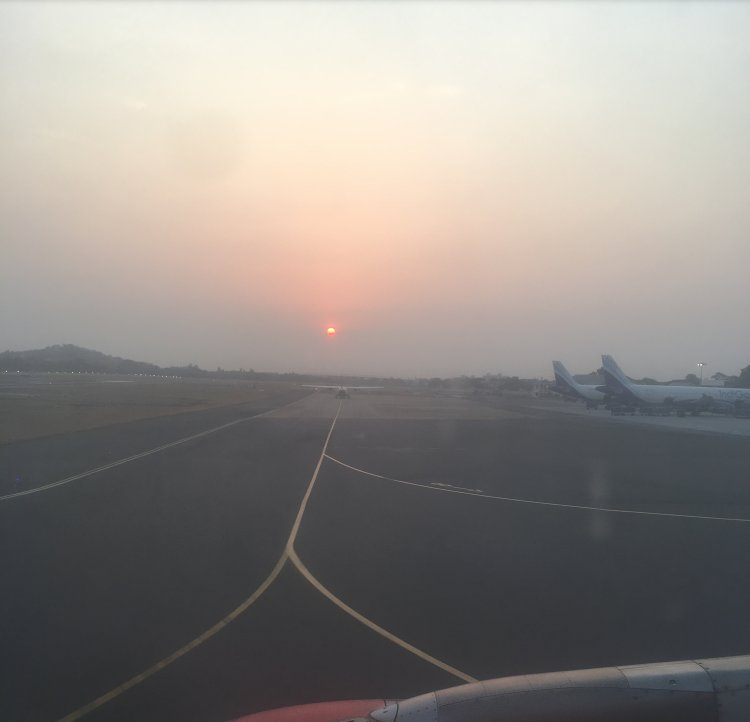
    DAY 1 CHENNAI AIRPORT SUNRISE
    The sunrise – Chennai Airport

    They did not sleep well for two days. They had to get up early in the morning the previous day to come to Chennai from SG. They woke up the next day, before the rooster started his duty. So, they fell asleep as soon as they got into the air craft.

    That was the first flight to Colombo from Chennai. The aroma of Air India, like broken seat handles, dirty luggage compartments made them feel at home. But it should be a hectic work for the staff members of the airline because it is just a 60 to 90 minute journey to Colombo. Being an international flight, they need to serve the food plate and collect everything back. Rangamani could see they were running front and back to clear the formalities!

    DAY 1 BREAKFAST
    Nashta

    Rangamani woke up when Air hostess tapped on his shoulders to ask him to unfold his table to place his breakfast plate. He might be sleeping like a Kumbhakarna with scary snoring! When he saw the breakfast plate, his mouth started pouring fluids! Yes. He was as hungry as Bakasura. He snatched the food plate like a hungry monkey. Thangamani and the kids were still sleeping in the front row. His mind has been deluged with cheers on seeing the bright sunlight on his window. He did not waste a second. As landing time was approaching, his hand and mouth started working as a speedy food processing machine.

    By showing them the green patches of Sri Lankan land, their vehicle landed on time. Rangamani felt nostalgic as the view made him recall his village days. When they came out, he could feel the pleasant weather. He could say that for sure as he was roasted in Chennai summer the previous day. The trilingual board welcomed them. ‘Ayobovan‘ is the word he learned from Rupavahini (Sri Lankan television) in his childhood. Bunga was still sleeping on his shoulder, when Rangamani entered the hall, where PM Ranil Wickramasinghe was smiling in his photograph accompanied by another photograph where then president Sirisena appeared with his pale boring face.

    Sri Lankan Airport looked like a ghost town. There were no passengers as international tourists stopped visiting Sri Lanka due to Easter Bombing. They cleared immigration on time. The immigration officer talked pleasantly in Tamil. Junga and Bunga were running and jumping like monkeys inside the empty immigration hall. It is not new. Sri Lanka has had monkey visitors from India since its Ramayana days.

    The luggage came even before they reached the luggage hall. Due to the bombing, there was some restriction for the travel agents to meet their guests. So their travel agent asked them to catch the free shuttle bus and alight at the parking area.

    Things to do in Colombo Airport:

    • Money exchange at Sampath bank
    • Local SIM card (if you travel without travel agent)
    • Food (I missed it. If you travel with kids, take proper food here or near by)
    DAY 1 COLOMBO AIRPORT
    Free shuttle bus from Colombo Airport to Parking Area

    Our Chauffeur, Tushara, came to the parking area with a garland and a goody bag. The bag contained our travel plans, his company information, and a local cell phone.

    There was a confusion in our communication. He was waiting for them in the arrival section, as security eased. But they came to the parking area by that time. Before he came, they faced the unavoidable people in the parking area, who tried to lure them for taxis, tour packages etc. They were uncomfortable. They felt like they were standing in front of Chennai Central Station. More over, it took some time. Junga and Bunga started feeling hungry. There was no place to eat. Fortunately Thangamani had packed their Air Indian breakfast. That helped. Whatever, it was a hole in Rangamani’s travel plan.

    One of the strangers, who was in porter apparel, forcefully helped to put their luggage inside their van despite his refusal. Firstly, Rangamani likes to handle his luggage myself. Secondly, he was not comfortable handling it with a stranger on a foreign land. He had a bad experience at Riyadh airport already. He was so close to being cheated at Manila airport. Finally, Tushara and Rangamani lifted the luggage bags; the stranger man was just touching it like the bishop of Rome touched the head of the wounded Ukranian kids passionately! He touted money for doing so. Ranga did not have any small amount to pay him. Finally, Tushara gave him something. Ranga settled it later during the trip. Anyway, it is part of any trip!

    To Kandy

    They got moved from Colombo to Kandy. The journey took three hours. But the trip was not boring as they keep on distracting their Chauffeur with various questions and dumping him with their thoughts. He might be wondering, would he have enough patience to drive the vehicle in that single lane.

    https://youtube.com/watch?v=fOWj75gW-LM%3Fversion%3D3%26rel%3D1%26showsearch%3D0%26showinfo%3D1%26iv_load_policy%3D1%26fs%3D1%26hl%3Den%26autohide%3D2%26wmode%3Dtransparent

    Rangamani looked around. He was captivated by the trees, the green hills, and the lawns. The land was mosaiced with grass, trees, and bushes. But the same land has its own devastating side, which is the reverse of what his kids were enjoying from their window seats! That place was really spooky during the war against Tamils and LTTE. While writing this in 2022, as the Sri Lankan economy was devastated by incompetent rulers and Corona, what do you think of the Sri Lankan achievement after that genocide. Rangamani shook his head to get away from such thoughts.

    கண்டிக்கு..
    To Kandy..

    They went there within two months of the Easter Sunday bombing in Sri Lanka. There were no tourists. Very few tourist vans were on the road. Instead, Sri Lankan soldiers were standing by its side. Rangamani booked our trip before the bombing. He was shocked to hear about the bomb blast. He was on a back foot, too. But the *** Lanka tour company assured him a full refund if I wanted to cancel. At the same time, they made him realize that this was the time they needed support. Ranga consulted Thangamani. She too, agreed to go ahead with their travel plan.

    Three hours later, they entered Kandy.

    DAY 1 KANDY ROAD 2
    To Kandy..
    To Kandy
    Railway Museum
    Road-side museum

    Kandy is a city in the Central Province of Sri Lanka, surrounded by lush green hills. People say that it was called as Kanda malai (Hill of Kandan). During colonial times, they called it Kandy. The temple of the tooth is located here. We shall talk about it later.

    The Peradeniya Botanical Gardens (Royal Botanical Gardens, Peradeniya) is located at the outskirts of Kandy. It welcomed them. This was the first attraction of that trip.

    Royal Botanical Gardens, Peradeniya

    There was no crowd at its entrance. Some locals were waiting for their turn to get entrance tickets. Ranga’s family were allowed in immediately, because they were tourists. That was Sri Lankan respect for tourists.

    They were exhausted by then. As soon as they went inside, Rangamani felt so hungry. If he were a mighty ‘bison of Ooty’, he might have eaten all those leaves and grass! You want to ask me why he was always hungry? What to do? Our poor man’s addiction to food grimaces at him often. He searched for something like a café or restaurant. There was only one. They had Western dishes and drinks.

    Photo(c) 2 Days In Kandy: 7 Brilliant Places To Visit In Kandy Sri Lanka [2019] | Dream Big, Travel Far
    Photo(c) 2 Days In Kandy: 7 Brilliant Places To Visit In Kandy Sri Lanka [2019] | Dream Big, Travel Far

    Rangamani ran in hunger, grabbed a chair, clutched the menu card, and started eating those English letters with his eyes! Urgently toasted breads, potato fries and juice were served as a nectar to satisfy their craving. Although they were not enough for their tummies, they gained some strength to walk around the park. Come, let’s see how our hero’s family went for a walk along that riverbank.

    There flew a beautiful river on the left side. It is the Mahaweli River / Mahaweli Ganga! Like the Ganges in our India, it is the longest river in Sri Lanka. Starting in Nuwara Eliya district and outfalling into the sea of Trincomalee.

    மகாவலி ஆறு
    Mahaweli River

    Bunga saw the local people taking a bath in the river. He asked his father Rangamani, “Appa, whey they take bath here? Don’t they have bath room at their house?”. How to explain these kids about the pleasure in taking bath in water stream?

    Mahaweli River

    Its banks were covered with dense bamboos. In addition, plants, bushes and vines had grown over there.

    Mahaweli River

    Lord Krishna never visited Sri Lanka. If he had come here, he might have wanted to make flutes with these bamboos, and immersed the bees in that garden with his divine tunes.

    பேராதனை தாவரவியல் பூங்கா
    The bamboos

    The elder kid Junga was not getting used to the new place yet. He was away from the family’s mindset. He grimed his face and began walking slowly. Rangamani tried his best child management skills to change Junga’s mood. ‘This is such a beautiful place, new place, new experience, new people, new plant, new vine’. Junga became even more furious. Thangamani felt sympathy at her husband’s worst ever child management skills.

    They looked to their right. There are durian trees in the wide green land of the park. This is the first time they have seen a durian tree, though they can not avoid its smell in Singapore. Durians are not allowed inside public transport and few hotels due to its pungent smell.

    Under the Durian tree

    Thangamani and Rangamani walked on the Royal Palm Avenue, in which the ancient Kings of Kandy used to walk as part of their royal procession. With his eyes glittering with proud, Rangamani saw Thangamani. She smiled and said, ‘enough, shut up and walk’.

    Royal Palm Avenue

    There was a Cannonbell tree. Rangamani tried his luck another time to convince Junga by lecturing him about the Nagalinga poo (cannonbell flower) and how it resembles Shiv Linga. He further added that Lord Shiva likes it. The kid stopped there for a while and gazed at him. His eyes told his father, ‘It’s okay. It’s his wish. What am I supposed to do with that?’.

    மகிழத்தின் நிழலில்!
    Centuries-old trees blessed them. This Spanish cherry tree (magilam or vakulam in Tamil) was sung by Tamil Sangam poet Kapilar as ‘பசும்பிடி வகுளம் பல்லிணர்க் காயா’ (Pasumpidi Vakulam Pallinark Kaya) while singing about plucking different flowers and stacking them on a rock.
    DAY 1 PERADANIA BOTANICAL GARDEN KANDY 8
    The board said that the Spanish cherry tree was planted in colonial times by the Prince of Wales. Rangamani told anxiously, “Not sure how much he looted from Sri Lanka in return!”

    They completed that trail by walking on Royal Palm Avenue, which went through a road with palm trees on both sides. They climbed the swinging bridge and enjoyed the beauty of the Mahaweli River. It is enough of this moment! Is the twin human eyes enough to appreciate the beauty of this place?

    Tushara said that there was an orchid garden. But they could not gallop. They moved out of that park with positive thoughts, hoping to be back there again!

    DAY 1 PERADANIA BOTANICAL GARDEN KANDY 10
    The bus stop outside the Peradania Botanical Garden, Kandy 10

    Kattukalai Pillaiyar Temple

    Their man took them straight from the park to Kattukkalai Pillaiyar Temple – a Ganesha temple – as they requested. Dear Readers, you should have gone with them inside that beautiful temple. The kumbabishekam took place recently. The temple was clean and beautiful to look at. Not much crowded. They waited and attended the evening pooja. They were able to worship Lord Shiva and Goddess Parvati in the names of Sri Somasundareswara and Sri Meenakshi, in addition to Lord Ganesha in the name of Sri Selva Vinayagar.

    DAY 1 KATTUKALAI PILLAIYAR KOYIL KANDY 1
    Kattikalai Pillaiyar Temple, Kandy

    While Thangamani was waiting at the temple, Junga and Rangamani visited the Ganesananda hotel next to it. Junga felt better and started uttering words. Junga packed cheese dosa while Rangamani took away masala dosa-s for their dinner. They chatted about the ongoing IPL match, until the food package (another pack of nectar!!) arrived.

    Around the lake

    Before they went to their shelter, Tushara drove them to a place from where they could get a glimpse of Kandy City. It was a view point, from where they could see the Kandy City, the Buddha statue on the mountain, the Kandy lake, and the temple of tooth.

    The day’s conclusion

    Very long day it was. They could not go anywhere anymore. They went to their shelter on the bank of Kandy Lake, took a shower, and grazed on their packed masala dosas. Rangamani felt about the hole in his travel plan when he chewed his piece of dosa. He should have taken a proper breakfast at Colombo before starting his journey. With the babies on his side, he should have done a better plan.

    Against mountains surrounded by trees, the gentle breeze comforted them. They lied down in a trance, thanking the Goddess Meenakshi for gifting them that day.

    See you in the next post. Tata!

    KANDY HOTEL (c) Google Maps
    Kandy resting place (c) Google Maps


    Thanks: Kannan Murugapandian, Google Maps

    I’m participating in #BlogchatterA2Z 2022

  • #BlogchatterA2Z Theme Reveal 2022: Yātum ūrē! / The world is my town

    Blogchatter is an amazing team to boost, sometimes turbo-boost, our blogging urge. I recently joined this community. I signed up for their #WriteAPageADay campaign to write 400 words every day in the month of February 2022. It was an exciting – sometimes tiresome – journey. Yet, Blogchatter offered me the One of the Top bloggers award for February and credited fair amount of credit points! More importantly, I got a chance to read the musings of other Indian bloggers.

    They announced the BlogchatterA2Z blogging challenge for April 2022. It’s been flashed out in my Twitter timeline many times. Fellow bloggers announced their themes. But I hardly had time to be cognizant of this challenge due to the perils of FY end.

    As part of this challenge, I am going to write 26 posts corresponding to the 26 alphabets in the month of April. The Theme of this series would be யாதும் ஊரே! / Yātum ūrē! / The world is my town.

    One post will be released every day except on Sundays. I shall use this opportunity to translate some of my old travelogues into English. I am planning to write some new travelogues, which were pending for a long time, as well. I am yet to arrive at a detailed plan!

    A: Along the banks of Mahaweli River (Travel fiction)
    B: Beetling around Kandy temple of tooth (Travel fiction)
    C: Collation of native food at Ramboda (Travel fiction)
    D: Drizzling Nuwara Eliya (Travel fiction)
    E: Elevated rails to Ella (Travel fiction)
    F: Footsteps to Little Adam’s Peak In Ella (Hikelog)
    G: Gritty and Greenly walk to 9 arch bridge (Hikelog)
    H: Vikram & Betaal’s Hegira to Yala national park (Travel fiction)
    I: The Infant of Kathirkamam/Kataragama (Travel fiction)
    J: A journey to Galle (Travel fiction)
    K: Kingly guests back in Colombo (Travel fiction)
    L: A lazy evening at Asiatique Night Market, Bangkok (Attraction)
    M: Masquerader at Riyadh (Travelogue)
    N: A Noon meal mercy & Cordial bus ticket (Travelogue)
    O: An overcast chilly day on the roads of Mumbai (Travelogue)
    P: Pursuing a Tamilian Cafe at Matunga (Travelogue)
    Q: Quenching my desire for Elephanta (Travelogue)
    R: The radius of rocky poems – Ellora (Travelogue)
    S: The sketchy caves of Ajanta (Travelogue)
    T: Trip to iconic buildings around London Bridge (Travelogue)
    U: The U turns and the breezy morning at Kodai hills (Travelogue)
    V: A vintage evening in the colonial streets of Jersey (Travelogue)
    W: Wander around Macritchie reservoir hills, Singapore (Hikelog)
    X: X roads of Ooty and my bike wheels (Travelogue)
    Y: Yet another lovely beach, brighton (Travelogue)
    Z: The zeal with zest for a desert safari at Dubai (Travelogue)

    Hope the blogger police allows this 🙂

    All the best to fellow writers. Those who want to sign up, you may click #BlogchatterA2Z

  • The Long Game: How the Chinese negotiate with India – Book Review

    Politically, the world has many serpents. Not all of them are lucky enough to be venomous. But the one with the most poisonous fangs, influences the group of other serpents.

    When we see the world has more than one serpent, there comes a conflict. How easy is to solve such conflicts between the two? Either by a war or by a dialogue! Dialogue is no way less than war, as it requires similar tactics and arriving at similar conclusions. These serpents have a habitual action of breaking treaties, while admonishing others. I am reviewing a book which describes the complexity of negotiation between two such Asian snakes – India and China.

    Name of the book: The Long Game: How the Chinese negotiate with India
    Author: Vijay Gokhale
    Genre: Political/External Affairs
    Borrow in NLB
    Buy from Amazon
    ISBN-10 ‏ : ‎ 0670095605
    ISBN-13 ‏ : ‎ 978-0670095605

    About the book

    The Long Game‘ presents a chronology of Indian relation with Chinese Government and the Communist Party of China. It has seven interesting chapters which includes the following.

    • How the newly formed Indian republic was in a hurry to recognize Chinese communists, who had toppled the previous nationalistic Government.
    • How India lost its privileges over Tibet without gaining anything.
    • How India was able to overcome Chinese plot to isolate it after Pokhran nuclear tests.
    • How China delayed recognizing the annexation of Sikkim and India persuaded them to agree.
    • How India got access to nuclear energy sources by limiting Chinese tactics to keep India away.
    • How China delayed and how India was able to get its approval to sanction Masood Azhar at the UN.
    • And finally, the extract of author’s best practices.

    Why do I recommend this book?

    When I was in a shopping center on Sukhumvit Road in Bangkok, I liked a ladies bag. I thought it was the most beautiful thing I could purchase in this universe. The seller sensed it. He did not reduce a single penny. My colleague said that I should not have expressed my eagerness to buy the product. When the seller senses the pulse of the buyer, he will not reduce his price.

    The way India recognized China after the communists of China toppled the Government and took over the crown. They were in need of international recognition. India, lead by Jawaharlal Nehru, wanted to ‘join the asian jyoti‘ and offered all his support to the Government formed by the insurgents, without any benefit to the Indian side. Nehru and his ambassador negotiated as I did, with the Bangkok Bag seller. It was a one-sided love of Nehru for China. He looked at them as friends; they suspected him. The worst part is Nehru did not even realize that they suspected his love!

    The author expresses his grievance on how the new Indian government’s inexperience in external affairs in the 1950s, lost many of its natural rights instead of gaining something. In addition, the author lists down the different tactics followed by the Chinese, to delay or stop any progress that affects their long term interests. I was amazed to see they were able to block Indian attempts to sanction Masood Azhar for a decade, to save its partner Pakistan, which is not worth a naya-paisa.

    The way they prepared for the meeting by borrowing time, their process-driven approach against the ad-hoc approach by the Indian side, were all good lessons for anyone, who is in position to negotiate with third parties. The way Indian side has transformed itself over the years based on different experiences looks positive. We can realize the commitment of the author to inculcate his knowledge into young IFS officers.

    India started its journey like a frog – one that screams and identifies himself as prey to a hungry snake – in the 1950s. Its experience in external affairs was frail and vulnerable. The synergy was missing. Nehru influenced decisions on the ground in a hurried manner without weighing the risks. But India tries to catch up by its learnings over the past.

    This book provoked me to compare the Chinese strategies described in this book with recent incidents. We could see amazing similarities.

    Chinese president came to Gujarat on an official visit to meet Indian PM on Sep 2019. On the same month, there has been a complaint of incursion of Chinese army as long as 100 KMs. When the same man visited Tamilnadu, he should have been preparing for an invasion of Eastern Ladakh. Even after we lost our lives in the butchery of Galwan valley, Delhi did not pronounce its enemy’s name. So we can anticipate that Beijing’s perception of Delhi and Delhi’s prolonged submissive approach to Beijing are likely to continue.

    The author says that Chinese are eminent in using democratic elements to manipulate a democratic country by using the immunity offered to their high commission status. At the same time, they isolate themselves without providing similar offerings to other countries to save their face among Chinese commoners. We recently saw Chinese advertisements in popular Indian dailies. There have been allegations in the US, that US news papers received donations from the Chinese for publishing articles that promote Chinese propaganda.

    Indian news paper published chinese propaganda
    Indian news paper published Chinese propaganda

    About the Author

    Vijay Gokhale - Picture (c) Wikipedia
    Vijay Gokhale – Picture (c) Wikipedia

    Vijay Gokhale is a retired Indian diplomat. He is the 32nd foreign secretary of India. He is a former Indian Ambassador to China.

    Relavant posts:

    Ref:

    Chinese PLA allegedly intrudes 100 km inside Indian territory

    Galwan Valley: China and India clash on freezing and inhospitable battlefield

  • End of radiance – Karna’s end | Mahabharata Paintings

    Karna took over as commander in chief of Kaurava army on the sixteenth day, after the fall of Drona. Kaurava army had much hope of recovery after the fall of their great chieftains, Bhishma, and Drona.

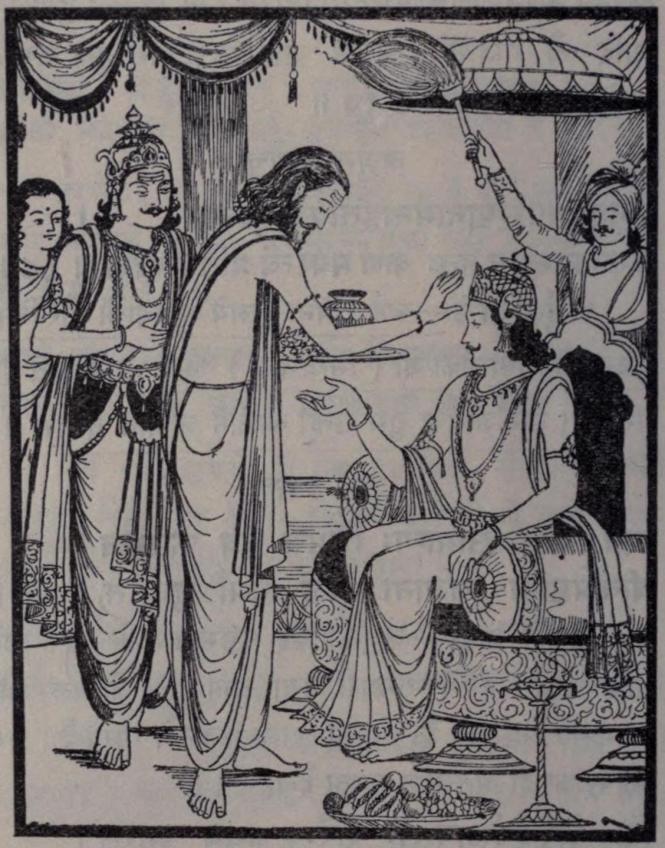
    Coronation of Karna
    Coronation of Karna

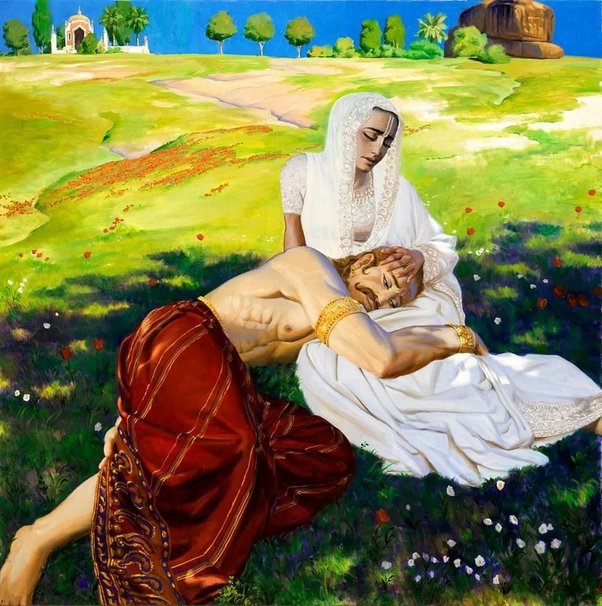
    Kunti knew about the news. She understood that she could not prevent the clash between her sons. But she wanted to minimize the damage by meeting him. Maybe, I think she might have felt that discussing that with Yudhishthira would not earn her because he did not know the background. Some versions of Mahabharata say that it was Krishna who sent her to seek protection for Pandava-s.

    It was early in the morning. Karna was in his morning prayers. Kunti came to meet him. Everybody knew that Karna would donate whatever had been asked. Karna understood her motive and asked her to express her wish in a grudge.

    “சந்தனக்கட்டைகள் அடுக்கிய சிதையைக் காட்டி பிணங்களை ஆசை காட்டிடும் வீண்வேலை… அர்த்தமற்றதும் கொடூரமானதுமான வீண் உடற்பயிற்சி! விரைவில் நாமிந்த காட்சியை முடித்துக் கொள்வோம்… எந்த லட்சியம் கருதி நீ இங்கு வந்தாய் – என்பதைச் சொல். இனி நான் மேற்கொள்ள வேண்டிய செயல் என்னவென்பதையும் கூறிவிடு. அச்செயல் என்ன ஆயினும் நானதற்குப் பணிவேன் என்பதை நிச்சயமாக நம்பிக்கொண்டு, சொல்லவேண்டியதை விரைவில் சொல்லி முடித்துவிடு”

    The futility of making a carcass happy by showing the pyre stacked with sandalwood. Meaningless and horrible futile exercise! We will finish this scene soon. Tell me what ambition you came here for. Please tell me, what you want me to do hereafter. Complete what you have to say as soon as possible, be confident that I will obey you no matter what.

    Ini nan urangattum, BK Balakrishnan
    Karna Kunti dialogue
    Karna Kunti dialogue

    Kunti requested him to come to Pandava‘s camp. Citing his bond with Duryodhana, Karna refused to oblige. She asked for the safety for Pandava-s. Karna assured her she will be known as mother of five sons even after the war, either with Arjuna or with him. Karna left to battlefield after that.

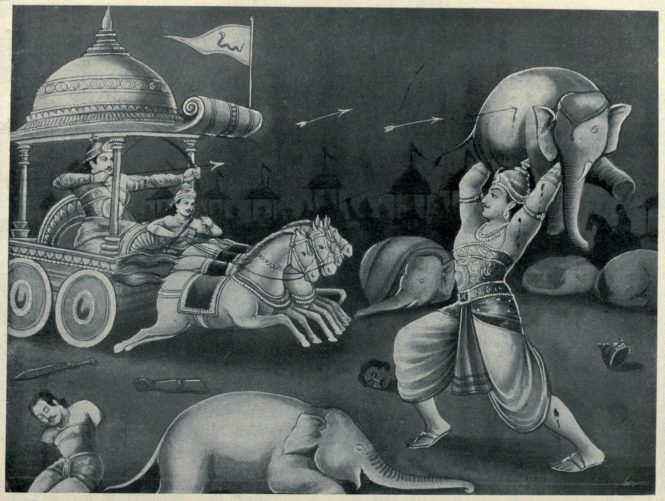
    It was difficult for Pandava-s to fight with Karna. Kaurava‘s army had time to take breath after successive loses on the sixteenth day. There was a dispute between Yudhishthira and Arjuna about Arjuna’s failure in tackling Karna. All Pandava-s except Arjuna had fought with Karna and lost before this dispute. Though they lost, Karna did not kill then, as he promised to his mother. Unaware of the reality, poor Pandava-s felt humiliated by Karna.

    Karna-Bhima
    Karna-Bhima

    Shalya – the Madra king and maternal uncle of Nakula and Sahadeva – was appointed as Charioteer for Karna by Duryodhana. Krishna raged a psychological war against Karna with the help of Shalya. As directed by Krishna, Shalya was praising Arjuna often. He pointed to his low birth as well to irritate Karna while fighting.

    Karna had a powerful astra (weapon) to kill Arjuna. It had the capacity to Kill Arjuna as well. But it can be used only once. Shayla advised Karna to focus on Arjuna’s chest. Karna was confident about this target, so he focused on Arjuna’s neck and shot it. Krishna pushed Arjuna’s chariot a few inches down. As Shalya expected, the astra missed its target and hit Arjuna’s crown.

    “கர்ணா, சிரசினை குறிவைத்து அந்த அஸ்திரம் நீ தொடுக்காதே. குறி தவறிவிடும்…” அதற்குக் கர்ணன் சொல்வான்: “மத்ரேசா உனது கூற்றின் பொருள் எனக்குப் புரிகிறது. ஆனால் லட்சியம் குறிவைத்து தொடுத்திட்ட சரம் தனை மாற்றி தொடுப்பது தர்ம நீதிக்கு உகந்ததல்ல. தொடுத்த அம்பினை கர்ணன் திருப்பி வைப்பதில்லை என்பதை நீ அறியவும்…”

    “Karna, do not aim at the neck and shoot that arrow. ” To which Karna will say: “Madresa, I understand the meaning of your statement. But it is not in the interest of moral justice to change the string of my target. Know that Karna will not revoke the his arrow.

    Ini nan urangattum, BK Balakrishnan

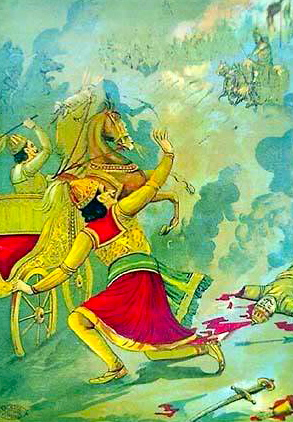
    Unfortunately, the wheel of his chariot got stuck inside the pit. He sought help from Shalya to release it. He refused to help and started abusing Karna’s caste.

    Death of Karna
    Death of Karna

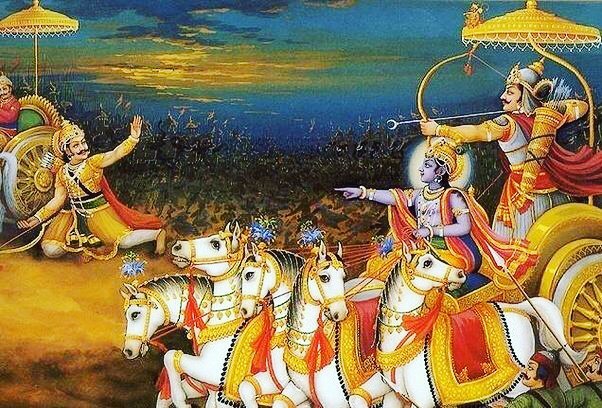
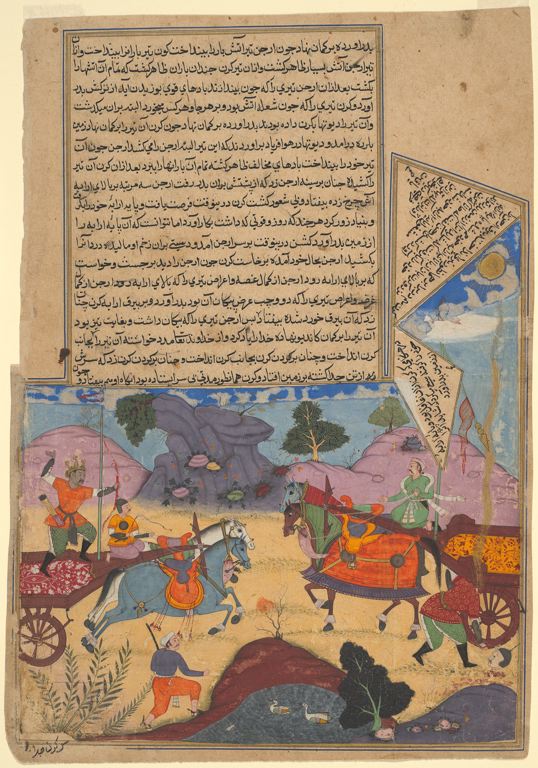
    Karna highlighted the rules of war and asked Arjuna to hold for some time until he releases his wheel from the pit. While Karna was busy releasing his wheel by showing his back to Arjuna, Krishna asked Arjuna to shoot his arrow to kill Karna. Arjuna refused as Karna was armless. Krishna countered him by saying that poor Draupadi had not shown such dharma when she was disrobed in court. Outraged Arjuna shot his arrow at Karna, which pierced his heart (or beheaded him).

    Death of Karna
    Death of Karna

    The beautiful and mighty warrior was born in right place at wrong time, faced humiliation allover, did not take anything from this world but donated a lot, ended his life in the battlefield miserably.

    Arjuna Slays Karna, page from a copy of the Razmnama, Mughal period
    Arjuna Slays Karna, page from a copy of the Razmnama, Mughal period

    This blog post is a part of Blogchatter’s WRITE A PAGE A DAY campaign.

  • The lie that killed Drona | Mahabharata Paintings

    It was the fifteenth day of war. Drona was unstoppable after he took over as commander-in-chief position after Bhishma. Being his teacher, Arjuna could not raise his bow against him. The cruel killing of the unarmed Abhimanyu changed his mindset. But he could not control his teacher and the cost of lives he imposed on Pandava army.

    Drona was killed, Razmnama, 1598
    Drona was killed, Razmnama, 1598

    Krishna suggested a deceptive plan to eliminate Drona. Drona had immense affection for his son Ashwatthama. But he could not be won as he was an immortal warrior. If he died, Drona would lose his will power on the battle field. Krishna suggested to them to make some plan so that he would hear these words.

    Bhishma killed an elephant by the name of Ashwatthama on the fifteenth day of war. Drona was surrounded by Pandava-s. They told Drona that Ashwatthama was killed. Drona did not trust their word. He verified with Yudhishthira, who was the Dharma raja among the warriors. Yudhishthira said ‘Yes’ loudly and murmured that he did not know if it was a man or an elephant, so that Drona would not be able to hear it.

    Drona felt helpless. The man who killed a number of people during the war, became wordless for those deceitful words. He put his weapons down, sat down, and practiced penance.

    Krishna asked Pandava-s to kill him. No one was ready, as Drona was not only a Brahmin but also their teacher. Krishna convinced them that he lived like a kshatriya (warrior), even though he was born as Brahmin. He further affirmed that Drona should die as Kshatriya as well. Dhrishtadyumna – Drupada’s son and commander-in-chief of Pandava’s army – took his sword out of his scabbard. He beheaded Drona to take revenge for his father’s death.

    A lie killed Drona – who had an enormous amount of vengeance on his friend, who took Ekalavya’s thumb as tuition fee, and who trained the Kuru princess.

    This blog post is a part of Blogchatter’s WRITE A PAGE A DAY campaign.

  • Rules broken to kill Bhurishravas | Mahabharata Paintings

    When Arjuna was in search of Jayadratha, he was hiding behind the Kaurava army. Arjuna got frustrated. Out of incapacity, Arjuna was a bit moody that day.

    Bhurishravas was a prince of a Himalayan kingdom. He was part of the Kurukshetra war. He was ferociously fighting with Satyaki, Krishna’s follower. Satyaki’s sons were killed by Bhurishravas in the war field earlier. So as a father, his fatherly love pressured him to avenge Bhurishravas.

    Bhurishravas and Satyaki were in a duel that day. Both of them lost their weapons during the scuffle. Later they started fighting with their hands. Bhurishravas hit Satyaki with his fist and dragged him inside the battle ground.

    Bhurishravas
    Bhurishravas

    Alerted by Krishna, Arjuna – out of anger, and frustration – shot an arrow at Bhurishravas, which cut his arm. It was a worse violation of war rules to attack him when he is involved in duals that too, from his back. Arjuna should have been given a red card and pushed out of Kurukshetra.

    Bhurishravas condemned Arjuna’s malpractice. He sat on the war field to perform Yoga. Satyaki made use of this moment and cut his head – another misconduct from Pandava side.

    A prince from a faraway kingdom, fell prey to malpractice of Dharma and died on the red soil of Kurukshetra.

    This blog post is a part of Blogchatter’s WRITE A PAGE A DAY campaign.

  • Jayadratha’s head blown off | Mahabharata Paintings

    Pandava-s were unable to save Abhimanyu. The teenage boy was cruelly killed by Kaurava warriors. Yudhishthira tried to save Abhimanyu. But Jayadratha blocked his way. In a way, he wanted to take revenge for his humiliation by Pandava-s, when he wanted to abduct their wife, Draupadi. Arjuna was far away from the location. Finally, no one could save Arjuna’s son. Pandava-s believed Jayadratha should be avenged.

    Jayadratha humiliates Draupadi - Raja Ravi Varma
    Jayadratha humiliates Draupadi – Raja Ravi Varma

    Arjuna took it more personally. He vowed to kill Jayadratha before the end of the fourteenth day war. Otherwise, he would kill himself. (Iravan/Aravan was also his son. He has been killed as well. Arjuna took it for granted. What a partiality!)

    Abhimanyu killed
    Abhimanyu killed

    Knowing this, the Pandava’s army came with moral power to slash Kaurava-s. But Drona did the trick. He injected the complete Kaurava force between Jayadratha and Arjuna to keep both of them at a safer distance. His plan was to hide Jayadratha until the sun went down so that Arjuna would commit suicide as per his vow. It worked until darkness spread all over.

    Krishna and Arjuna in battlefield
    Krishna and Arjuna in battlefield

    Arjuna was unable to find Jayadratha. He was frustrated. He had gone insane. He lamented to Krishna. Krishna asked him to calm down and listen to Jayadratha’s exultation in darkness carefully. He asked Arjuna to shoot his arrow in that direction. He also told him that it was not the end of the day as the solar eclipse occurred at that time.

    Arjuna shot his arrow. Jayadratha was killed! He was beheaded, Arjuna shot arrow after arrow so that his head would be pushed high and fell on the hands of Jayadratha’s father before it fell down on the ground. As per his own boon, the head of Jayadratha’s father broke into thousands of pieces. Both Jayadratha and his father dead on the same day!

    Death of Jayadratha
    Death of Jayadratha
    Jayadratha's head falls in his father's lap
    Jayadratha’s head falls in his father’s lap

    Why did Arjuna take Abhimanyu’s death seriously, while he took Aravan’s death for granted? It is an open question!

    This blog post is a part of Blogchatter’s WRITE A PAGE A DAY campaign.

  • The mutilated Abhimanyu | Mahabharata Paintings

    After the fall of Bhishma, Drona became the commander-in-chief of Kaurava army. Though he was a skilled Archer, teacher and master of war tactics, he could not get an opportunity to slay any of the Pandava-s to take revenge for Bhishma’s fall. Karna – who had vowed not to come to the battlefield under the leadership of Bhishma – had joined the army already. Krishna kept Arjuna at a distance from him, as Karna had the weapon to kill him.

    Abhimanyu bids farewell to Uttara
    Abhimanyu bids farewell to Uttara

    As Kaurava-s did not get notable victory for Bhishma’s fall to Pandava’s foul play, Drona was under pressure when he came to battlefield on thirteenth day.

    He formed a chakra-vyuga, a circular maze to trap Pandava-s. Yudhishthira fell as a prey. He got stuck inside the chakra-vyuga. Krishna, who was at far-away distance, blew his conch to seek help to save Yudhishthira from other Pandava-s. No one was able to help him. This is when the young upapandava Abhimanyu got into action.

    Abhimanyu battling alone in the Chakravyuha
    Abhimanyu battling alone in the Chakravyuha

    The chakra-vyuga intrigued him. His maternal uncle – Krishna – taught to him on how to save others from this round maze. But he did not teach him about how to eject oneself safely.

    So he successfully broke the chakra-vyuga, scattered the warriors in the maze wall, and saved Yudhishthira. Before he accomplished his notable victory, he was surrounded and attacked by the brave warriors of Kaurava army, who were his own relatives.

    Abhimanyu
    Abhimanyu

    Karna, Duryodhana, Drona were in front of Abhimanyu. His chariot, bows, sword and spheres were broken. Jeyamohan had portrayed this scene painfully in his novel kaar-kadal of Venmurasu novel series.

    An unarmed teenage boy, fought bravely with a wheel of a chariot in his hand. He killed Laxmana Kumara – son of Duryodhana. Angered by this, Duryodhana asked Drona to move the target of Chakra-vyuga from Yudhishthira to Abhimanyu.

    The Death of Abhimanyu
    The Death of Abhimanyu

    Arrows from Drona, Shakuni, Karna, Duryodhana stitched Abhimanyu and cut him into pieces. A brave boy – who fathered the next generation of Kuru clan – was killed tragically. Yudhishthira must have suffered the same fate instead of Abhimanyu. Dharma raja Yudhishthira got a life at the cost of his nephew!

    • The illustrated Mahabharata, Dorling Kindersley India, Penguin Random House, 1st Ed. 2017
    • The Mahabharata Set Of 10 Volumes, Bibek Debroy
    • Kaar kadal / Venmurasu by Jeyamohan

    This blog post is a part of Blogchatter’s WRITE A PAGE A DAY campaign.

  • Foul play – Bhishma on bed of arrows | Mahabharata Painting

    10th day of the war – The pressure was on Arjuna to kill Bhishma. Because the old man was unbeatable and ruined Pandava‘s army. 10 days have passed already. War materials are being consumed day by day. But the war expanded in its own way.

    So a foul play was planned by Krishna. He suggested Shikhandi – a third gender – to board Arjuna’s chariot. Krishna’s plan was to make Bhishma to lower his bow, so that Arjuna can use that moment for his benefit.

    Bhishma refuses to fight with Shikandi
    Bhishma refuses to fight with Shikandi

    It worked out. Bhishma thought Shikhandi was a female. But Krishna justified him as a male. Bhishma did not want to fight with him and lowered his bow. Arjuna appeared from Shikandi’s back and shot Bhishma with arrows – batch after batch!

    The hero of Mahabharata – the descent of the original Guru dynasty – fell on the ground on the bed of arrows.

    Bhisma on arrows bed
    Bhisma on arrows bed
    • The illustrated Mahabharata, Dorling Kindersley India, Penguin Random House, 1st Ed. 2017
    • The Mahabharata Set Of 10 Volumes, Bibek Debroy

    This blog post is a part of Blogchatter’s WRITE A PAGE A DAY campaign.

  • A excruciating war starts | Mahabharata Paintings

    Pandava finished their exile life

    Pandava-s sought refuge at Virata's palace
    Pandava-s sought refuge at Virata’s palace and completed their incognito life

    Gaurava-s sniffed about Pandava-s hiding in Virata. They attacked Virata without giving any opportunity for Pandava-s. There was a small war in which Arjuna fount as Brihannala. Virata-s won the war to save their kingdom with Brihannala/Arjuna’s help. With that, the 13 years of exile life came to an end!

    They exposed themselves to Virata. Virata apologized for treating them as servants. In turn, Virata offered his daughter Uttara to get married to Arjuna. As Uttara was the taught by Brihannala, Arjuna said he could not marry her. But he would accept her as his daughter-in-law. Uttara married Abhimanyu later.

    The messengers

    Pandava-s took temporary shelter. They sent messengers to Hastinapur to ask Duryodhana to return Hastinapur. Duryodhana refused. Messengers came back empty handed. Krishna felt it was the final chance to avoid war. He himself went to Hastinapur as a messenger carrying Yudhishthira’s message.

    Sanjaya
    Sanjaya

    Krishna meets Duryodhana

    Duryodhana understood about Krishna’s arrival. He arranged for food and shelter on his way. But Krishna refused to enjoy his hospitality. Even after Hastinapur, he refused to stay at the palace. He stayed at Vidura’s house.

    The negotiation started. Duryodhana was adamant in his claims. He was a good ruler. He rules both Hastinapur and Indraprastha without any concerns. He asked Krishna, why should he return his kingdom, while he offered good governance.

    Krishna made it clear that he did discuss the good or bad governance there. The discussion is about his promise to give back Indraprastha after Pandava’s exile. It was a failed negotiation. Krishna asked for five villages, then five houses. Duryodhana refused to give even five inches of land. Krishna warned him not to pave the way for the destruction of families on both sides. It looked trivial argument to Duryodhana. Krishna then warned him that Pandava-s would meet them in Kurukshetra. Let that red soil decide who holds the dharma. Being angry at his statement, Duryodhana ordered his squad to arrest Krishna.

    Krishna as messenger. Duryodhana issue orders to arrest Krishna. Satyaki protests. Image (c) Raja Ravi Varma
    Krishna as messenger. Duryodhana issue orders to arrest Krishna. Satyaki protests. Image (c) Raja Ravi Varma

    Krishna asked him, what did he think about him. Krishna transformed himself into Vishvarupa. The kings assembled over there were spellbound.

    Dhritarashtra asked Sanjaya what the kings saw there? As there was no reply, He asked Krishna himself if he could get vision to see him. He had been gifted with vision to see the Vishvarupa. He thought he did not want to see anything else with his eyes there after. He continued to be blind as usual. Kings saw Brahma, the creator god, Lord Shiva, the destroyer in Krishna’s Vishvarupa. The eyes, mouth and ears were fuming. They saw all the creatures inside. That was the end of negotiations. The kings dispersed from the negotiation hall one by one.

    Krishna meets Karna

    Krishna met Karna before he left Hastinapur. As a great warrior, Karna added an enormous amount of power to Kaurava-s. Krishna wanted to divide and rule Kaurava-s. He asked Karna, why did he support Duryodhana, even if he knows his way is against the Dharma. Karna asserted his commitment to Duryodhana, his friend.

    Karna with Krishna
    Karna with Krishna

    Krishna told him the secret of his birth, the information he wanted to know, the information that will bring him out of his low-birth complaint. Krishna told him that he is the ender son of Kunti. By law, he came the son of Pandu, Hence he is the elder Pandava. He can be the emperor supported by all Pandava-s and Kaurava-s. Draupadi will accept to accept to him as well.

    Karna was spellbound. But he recalled Duryodhana’s recognition since the day he appeared against Arjuna during a skill display ceremony. It was due to Duryodhana, he had been crowned as King, that helped him to come out of the low-caste derision. Even with that offer, Karna refused to change his camp.

    Duryodhana was confident of his success in war because of Karna, Bhishma, Drona, and himself. Krishna’s effort to stop the war (or divide and rule) did not work out.

    Krishna meets Kunti

    Krishna met Kunti to ask her, if she had anything to inform his sons. She asked them to fight abiding by the law of war.

    Kings taking sides

    Both parties have started to finalize their alliance with friendly countries. Yadava army joined Kaurava-s. Krishna joined Pandava-s with a condition that he would not fight. Balarama did not join the war. Rukmi was rejected by both parties. The final collection of troops traveled to Kurukshetra.

    Aravan kalapali

    Both parties looked for an auspicious time to start the war. It was decided as well. Kaurava-s army has more akshauhini-s than those of Pandava-s. So there was a widespread demotivation among the Pandava army. To motivate the force, troop leaders a self-sacrifice to Kali, the goddess of war.

    Self-sacrifice is a cruel form of killing a human being and offering him to God. All humans cannot do this. A man with a predefined set of anatomy would be chosen for this. Among the troops there were three persons with such body features – Krishna, Arjuna, and Iravan/Aravan. Krishna and Arjuna cannot be lost. So Aravan became the natural choice.

    Aravan was the son of Arjuna through Ulupi, a Nagini during his visit to north eastern part of Bharatha khanda. Arjuna asked if he is ready to do a self sacrifice. He asked for three boons. To make him as a war warrior; to make arrangement so that he can view the war completely; To find a wife to cry after his death.

    First option was agreed.

    After he did self-sacrifice, his head would be kept in a place, from where the whole war field could be observed from a bird’s- eye perspective. So the second request was also agreed.

    The third option was difficult. To find a bride for Aravan, that too in a war field, is not possible. As per the stories, Vishnu took Mohini form and married him. As per Jeyamohan’s Venmurasu, she was assumed as a third gender, and came with troops. The marriage was conducted. Aravan was given as a sacrifice to Kali by beheading him. The transgender woman cried out loud about her husband. This is celebrated as Aravan Kalappali festival in Tamilnadu, Sri Lanka and Singapore.

    The war starts

    Pandavas headed by Yudhistira and accompanied by Krishna ask Bhishma permission to start the war
    Pandavas headed by Yudhistira and accompanied by Krishna ask Bhishma permission to start the war

    The great war of Mahabharata began at Kurukshetra after blowing the conch Panchajanya by Krishna.

    References / Gratitude:

    • The illustrated Mahabharata, Dorling Kindersley India, Penguin Random House, 1st Ed. 2017
    • The Mahabharata Set Of 10 Volumes, Bibek Debroy
    • Senna Vengai / Venmurasu by Jeyamohan

    This blog post is a part of Blogchatter’s WRITE A PAGE A DAY campaign. (320 words)